Sequel to Un-Frozen Fear: The Law Behind True Love (Augustine/Kierkegaard Movie Review)
As Tim Tebow, write how religion sets men up for heartbreaking failure, which paradoxically is the only way to understand the cruciform Jesus — if we give up our Poseidon/Apollo/Dionysius PAD-ing.
ChatGPT Prompt
The disciples had shoulder pads on their hearts.
That is the hidden tragedy of Mark 6.
Jesus tells them:
“You give them something to eat.”
— Mark 6:37
And immediately the panic starts:
- not enough money,
- not enough bread,
- not enough strength,
- not enough competence.
Because masculine identity built on adequacy always experiences insufficiency as humiliation.
So they PAD their hearts.
PAD: Three Forms of Masculine Armor
Poseidon
Poseidon says:
Dominate harder.
Become powerful enough that weakness never touches you.
- force
- control
- virility
- indispensability
- conquest
Apollo
Apollo says:
Understand harder.
Become disciplined enough that failure never exposes you.
- competence
- analysis
- mastery
- optimization
- correctness
Dionysus
Dionysus says:
Escape harder.
Lose yourself deeply enough that inadequacy disappears.
- intoxication
- ecstasy
- stimulation
- emotional fusion
- catharsis
Christ Breaks All Three
The disciples cannot feed the multitude.
That is the point.
The miracle begins precisely where masculine competence ends.
Jesus takes:
- inadequate bread,
- inadequate men,
- inadequate faith,
and creates abundance.
Then comes the detail that should have shattered them:
twelve baskets left over.
— Mark 6:43
One basket per disciple.
As if Jesus is saying:
“You could not feed them.
But I never asked you to become the source.
Only to distribute what I give.”
The Hard Heart
But Mark says:
“They did not understand about the loaves, because their hearts were hardened.”
— Mark 6:52
They would rather misunderstand Jesus than face the heartbreak of insufficiency.
And honestly, most men would too.
Because the cruciform Christ is terrifying.
Not because he condemns weakness,
but because he refuses to let strength become identity.
The Gospel’s Offense
The Gospel does not say:
“You are enough.”
The Gospel says:
“Bring me your insufficiency.”
Compare:
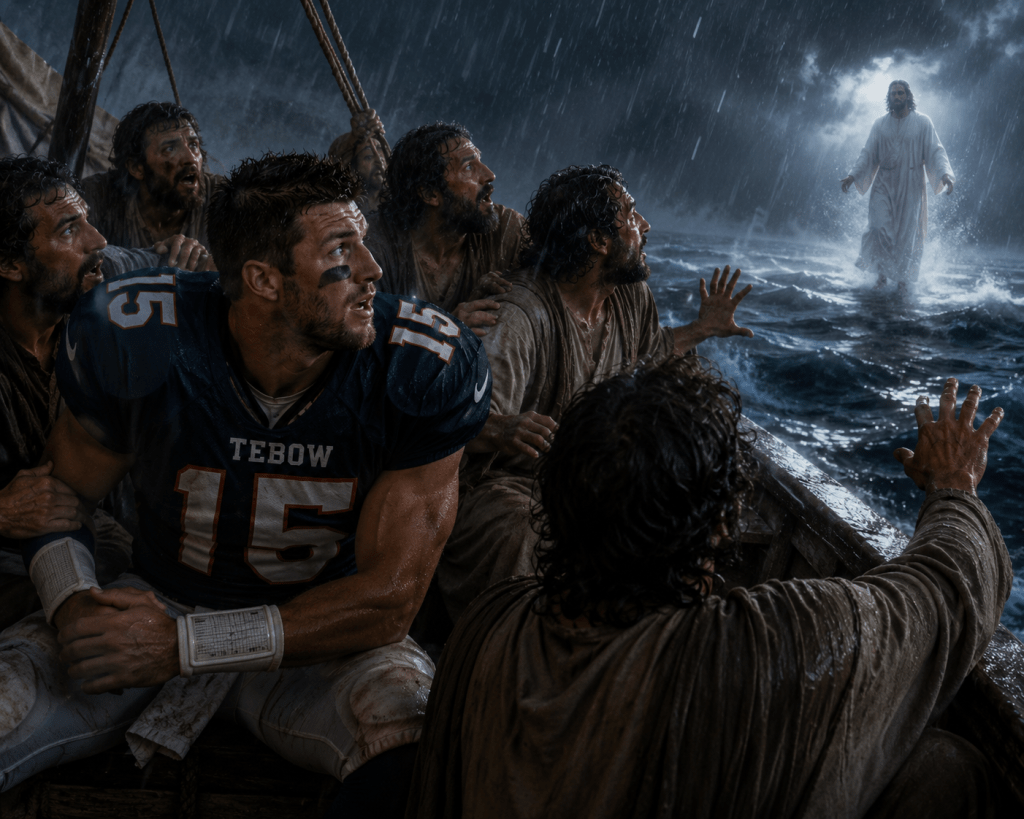
That is why the disciples see Jesus walking on the water and think he is a ghost.
They cannot yet imagine divine power appearing without domination.
See:
Cruciform Masculinity
But Jesus keeps coming anyway.
Not as Poseidon.
Not as Apollo.
Not as Dionysus.
But as cruciform abundance:
- broken bread,
- open hands,
- surplus grace,
- and a love strong enough to break the heart without destroying the man.
See also:


Leave a Reply