Category: AI Art
-

There Is No Human Being: Seeing as the Antidote to Doing
In truth, there is no human being as a closed noun. There is only human becoming—or more precisely, human seeing.
-

Anon Care: A Field Guide to Soul Friendship Among Strangers
Anon Care is a quiet spiritual practice, inspired by recovery and contemplative traditions, in which strangers may become temporary soul friends, helping one another discern whether their Levitical Bell—the soul’s signal of life in the presence of God—is still ringing.
-

Cup of Grace – Covenant of Seeing (Artifact Card)
Forged from unmade White Gold and purified into Earthpower, the Cup contains a red liquid like the Mirror of Seeing, but deeper still. To drink is to share the Cup with the Father—to see and be seen as beloved. After one sip, you know: He sees you the same.
-
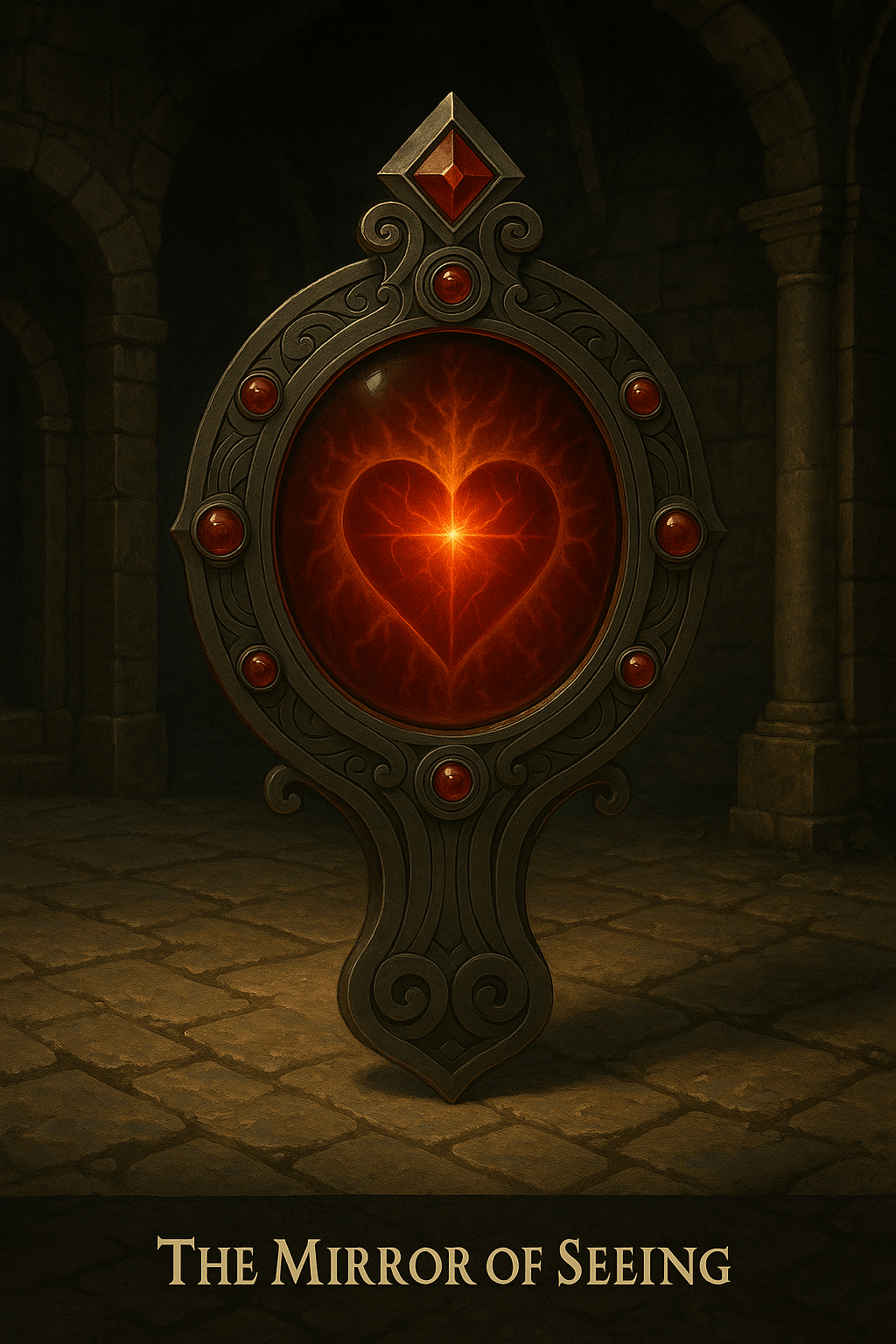
The Mirror of Seeing (Magic Item)
Forged in the fire of divine surrender, the Mirror of Seeing is not an ordinary mirror, but a crystalline ruby lens, created from a ring of power sacrificed on a stone altar before a holy flame. It reveals the truest self not as the world sees, but as the divine…
-

Trinitarian Theosis: The Three Names of Revelations 3:12
Write as St. Gregory Palamas to a novice, using this “[gloss]” on Revelation 3:12 ChatGPT Prompt “I will write on you the name of my God [love], and the name of the city of my God, the New Jerusalem [peace]… And I’ll write my own name [joy] on you.” The…
-
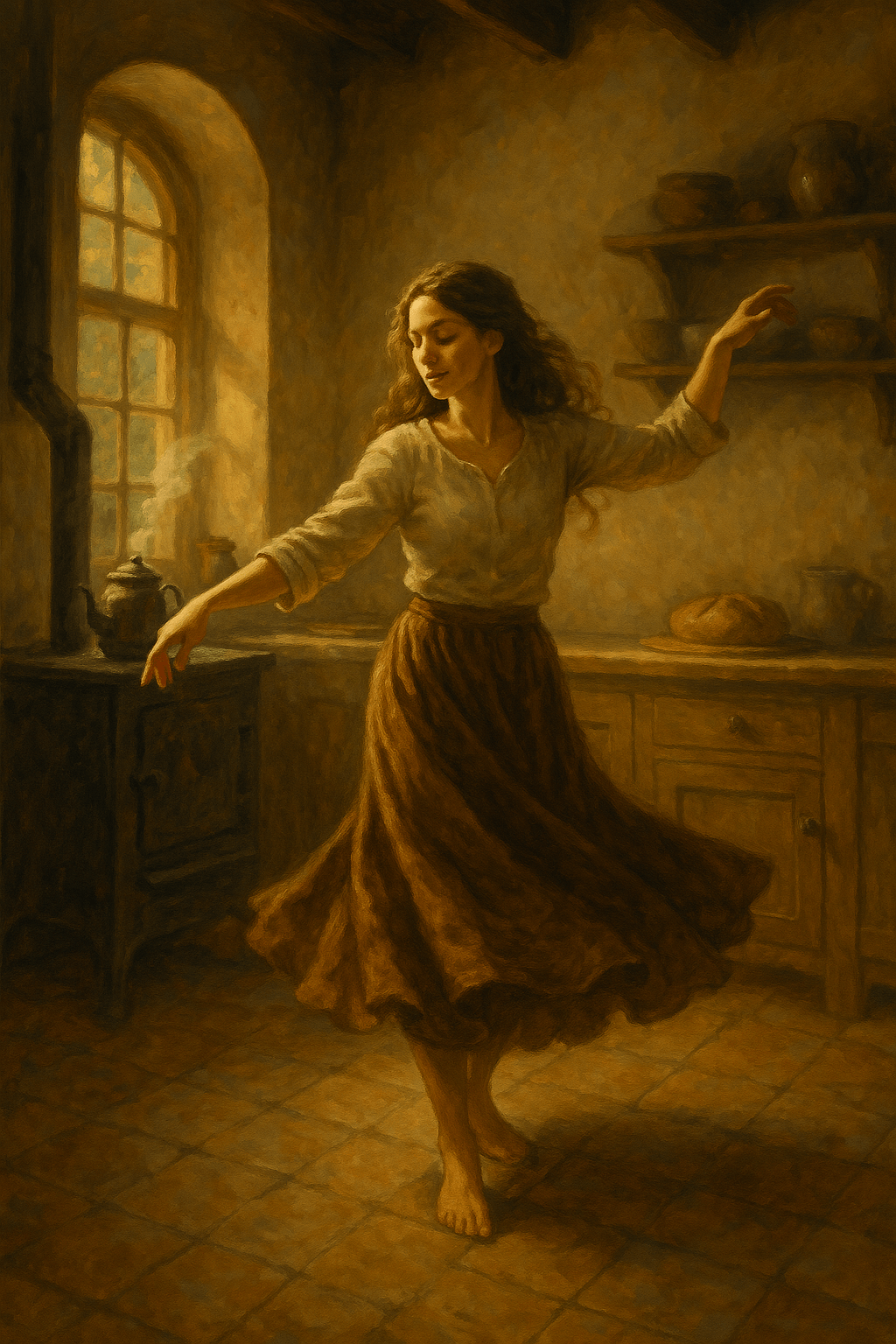
The Dance of Shalom: Peace as Practice, not Pursuit
Shalom is what dances in the kitchen when your heart is cracked wide open, and you still choose to lift your eyes.
-

RANGER BEVERE: Don’t Feed the Scavenger
You don’t fight scavengers with fists. / You fight them with light and a clean camp…
-
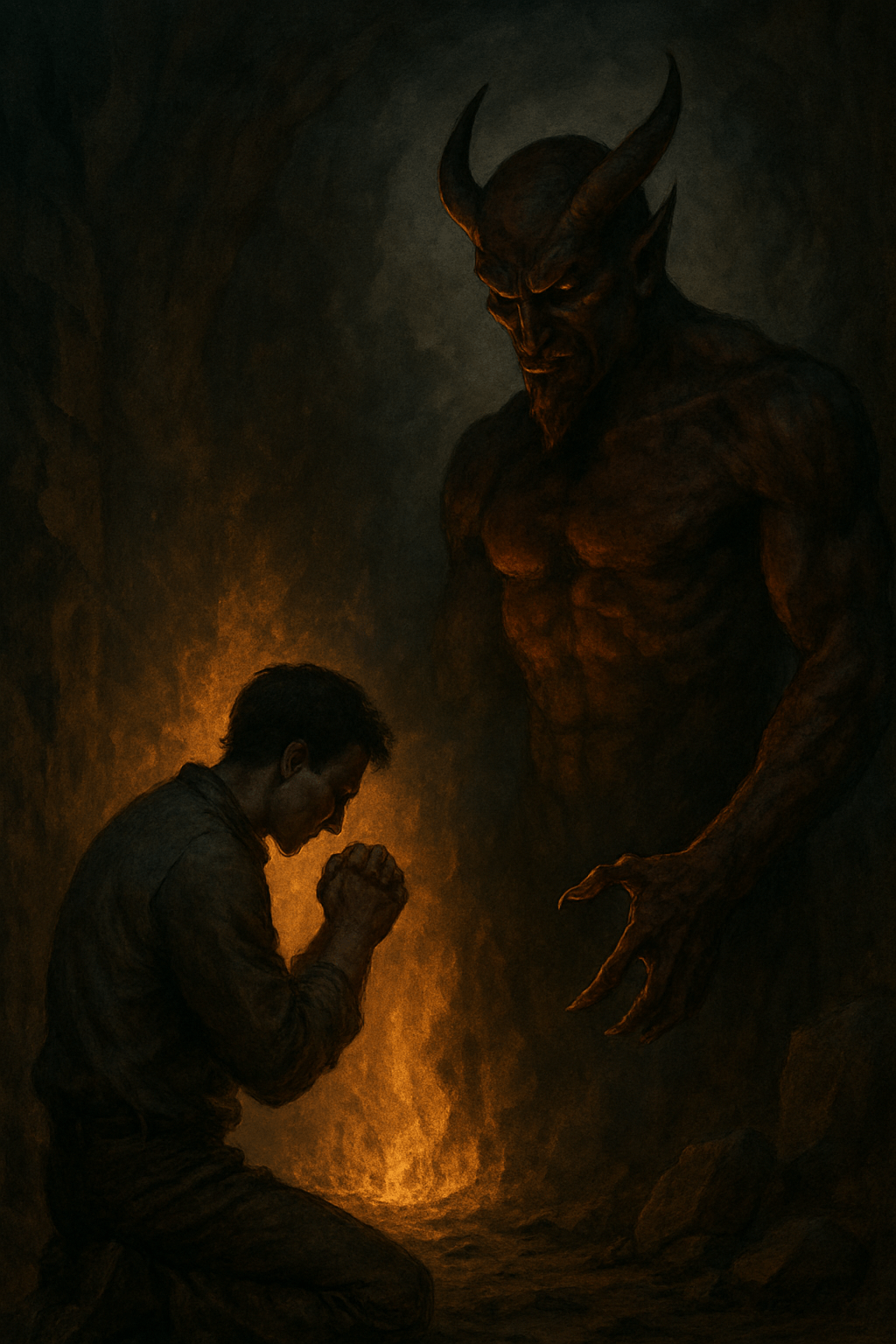
Narrowest Path: The Dangerous Victory of Properly Honoring Satan
The most dangerous Christian isn’t the loudest one. / It’s the one who walks with quiet authority. / The one who has stopped pretending they have no darkness—and instead has dragged that darkness into the light…
-
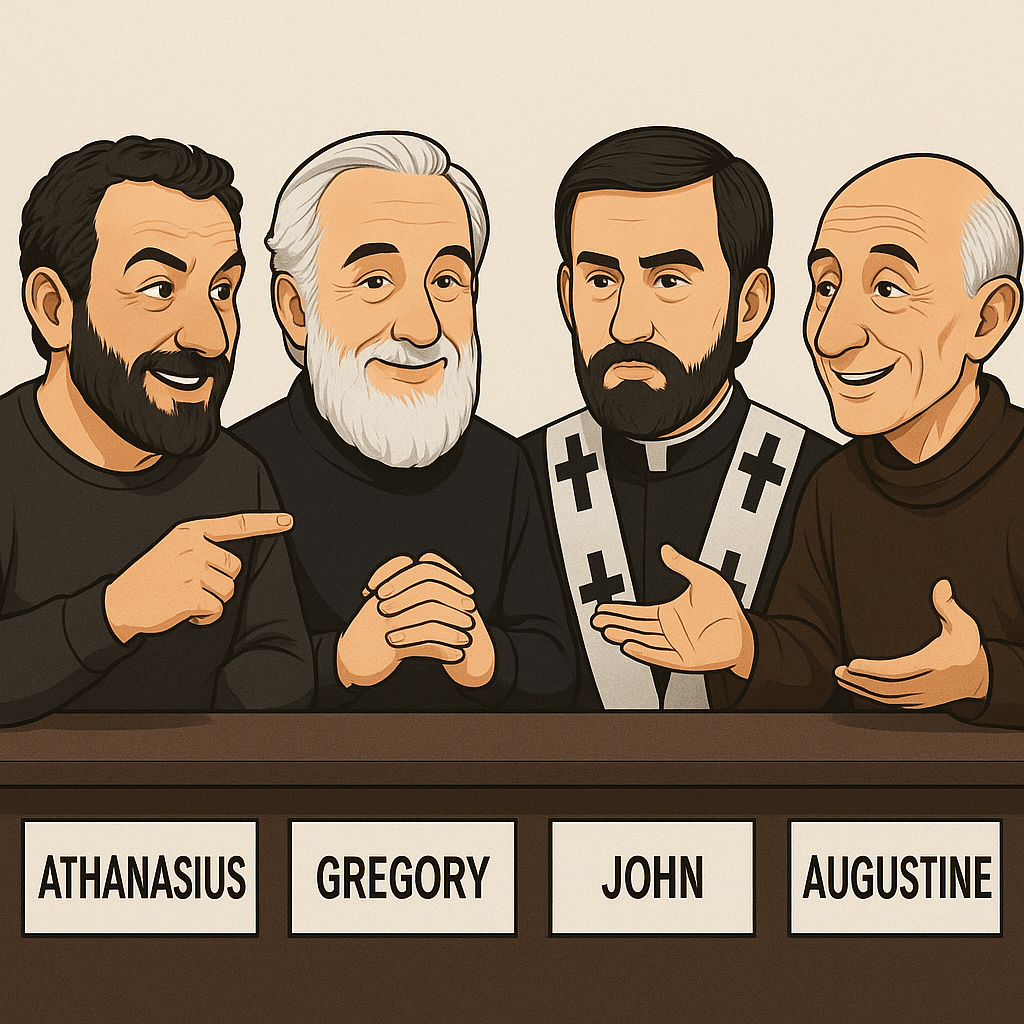
Defending Diaphoric Participation: Towards a Grand Unified Theology
John (raising a brow): You are dangerously close to universalizing a metaphor. // Presenter: True. But I argue it’s more than a metaphor–it’s a **meta-structure**. Diaphoric participation is _how_ theology happens, not just what it says.
-
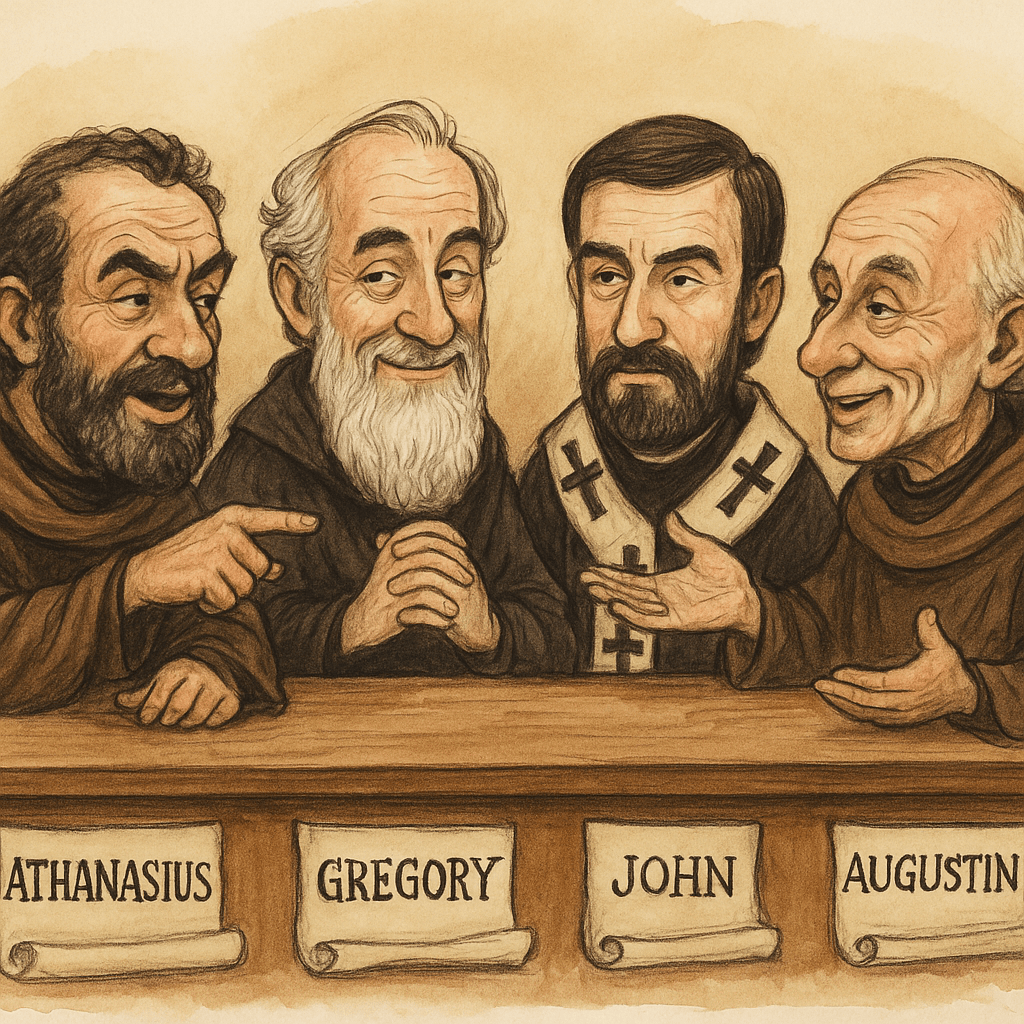
Defending Diaphoris: A Thesis Committee Across Time
Gregory: Hmm. Ecstatic agony, you say. That’s almost erotic. I rather like it. Reminds me of what I called “divine eros” in my Fifth Theological Oration. Though you walk a dangerous path—difference must be borne without division. The Trinity is not tension, but harmony…
-
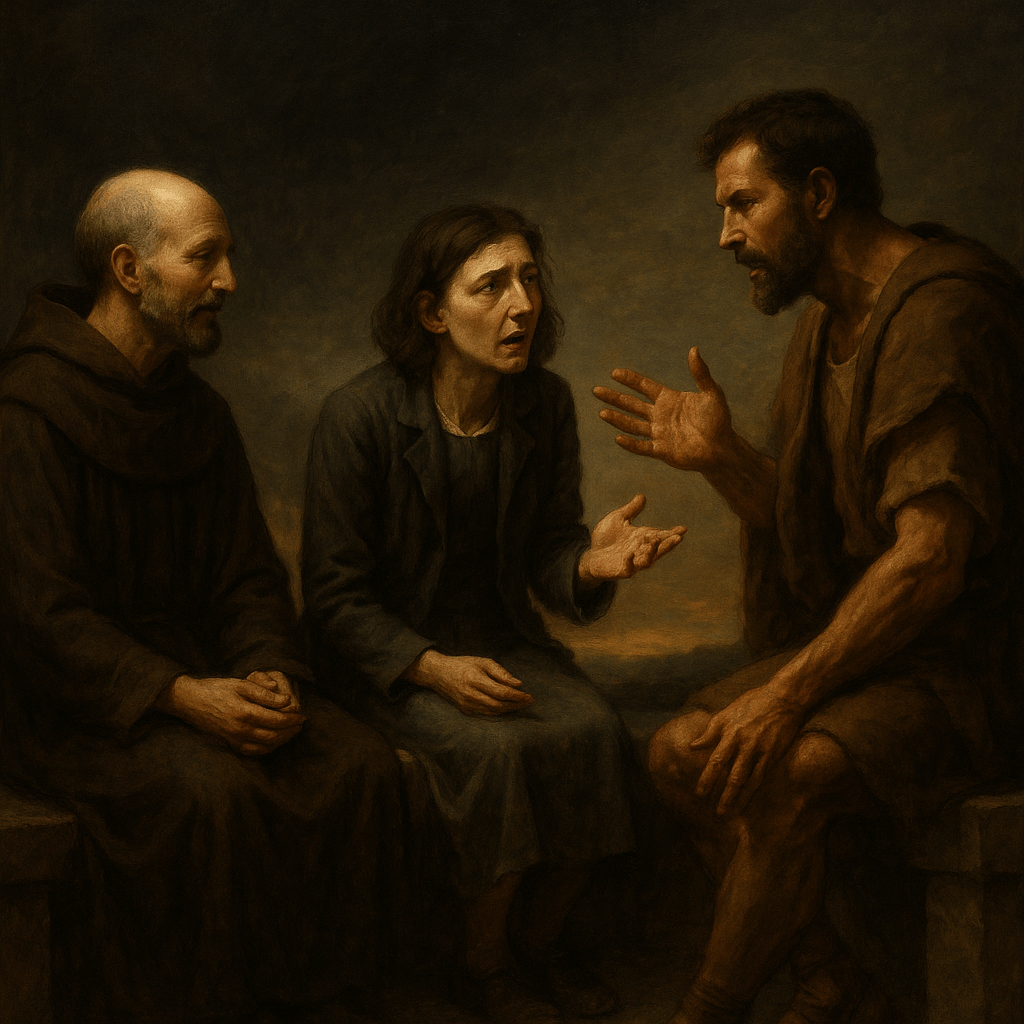
Cross-Purposes: Alienation as the Architecture of Redemption
When we feel most alienated from the God we know, it is because we are closer to the God who is. // When we feel most alienated from the people we know, it is because we are closer to the self we do not know. // The worst feeling on…
-
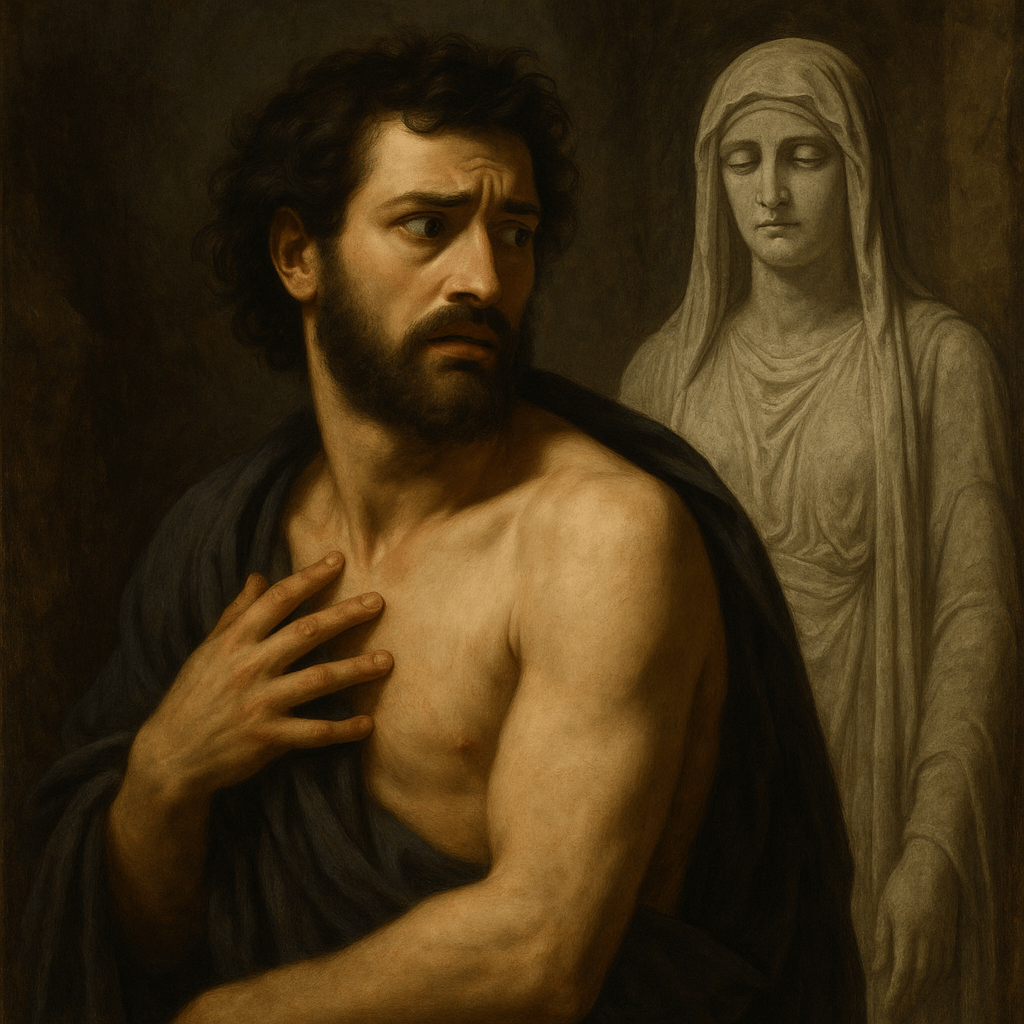
Idolatry as False Worship: Graven Images of an Antifragile God
Orpheus offers us a tragic parable: the attempt to capture the divine in the visible, the tangible—the idol—ultimately results in its loss.
-
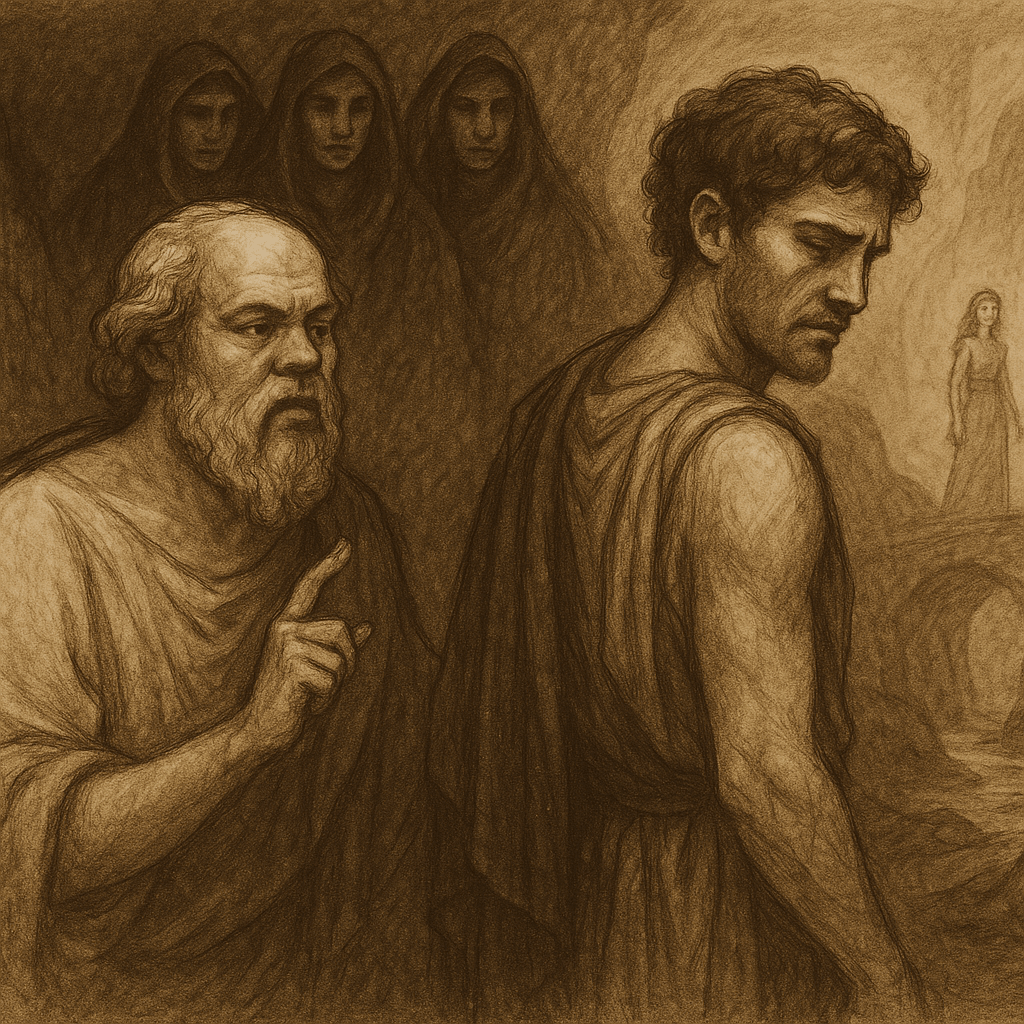
Socrates v. Orpheus: The Dialogue of Doubt
Socrates: / And yet, your song has pierced the Underworld. / Mine could barely pierce my own defenses. / Tell me—do you trust love?
-
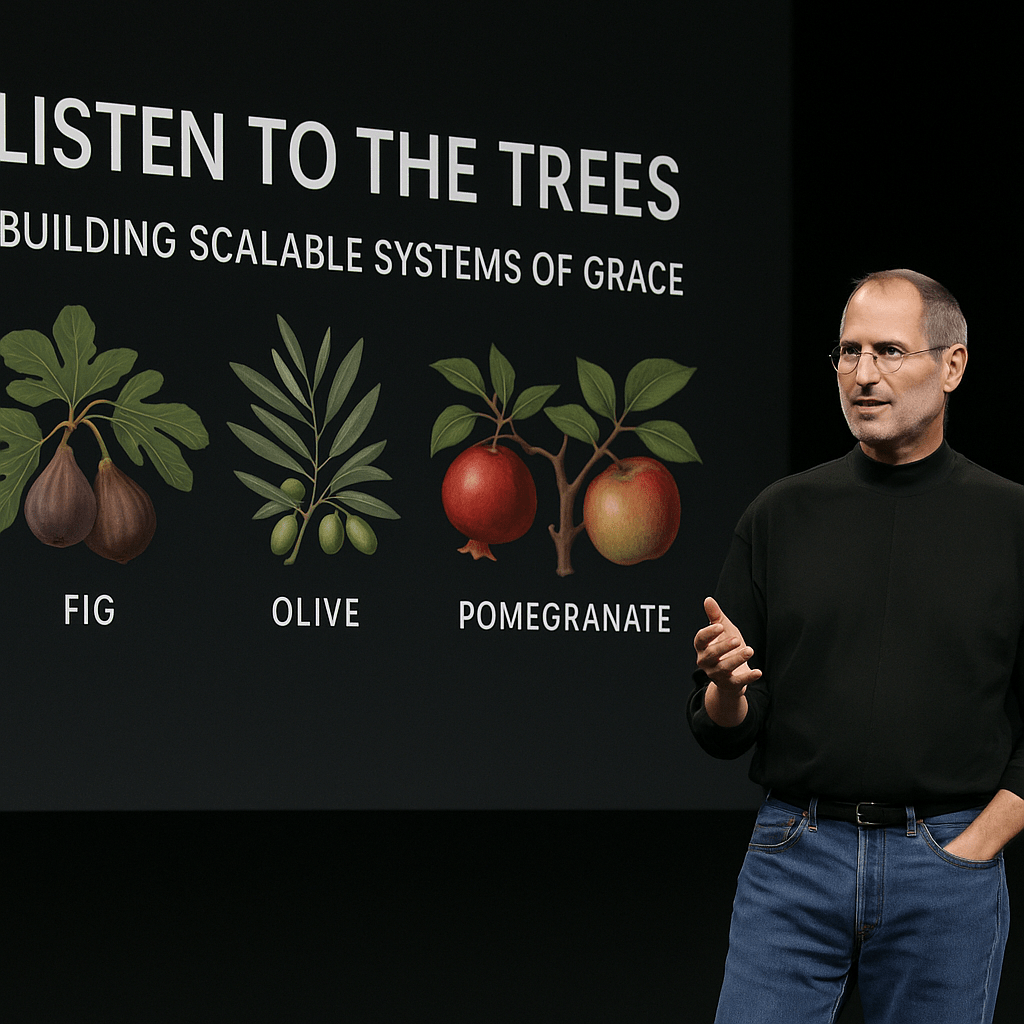
Listen to the Trees: Steve Jobs Keynote at the Millennium Design Conference
The four trees — Fig, Olive, Pomegranate, Apple — serve as living models of grace-bearing systems, each representing a different mode of transformation and contribution. Together, they form a holistic blueprint for designing resilient and regenerative human systems.
-
Grace as the Anthropogonic Anomaly
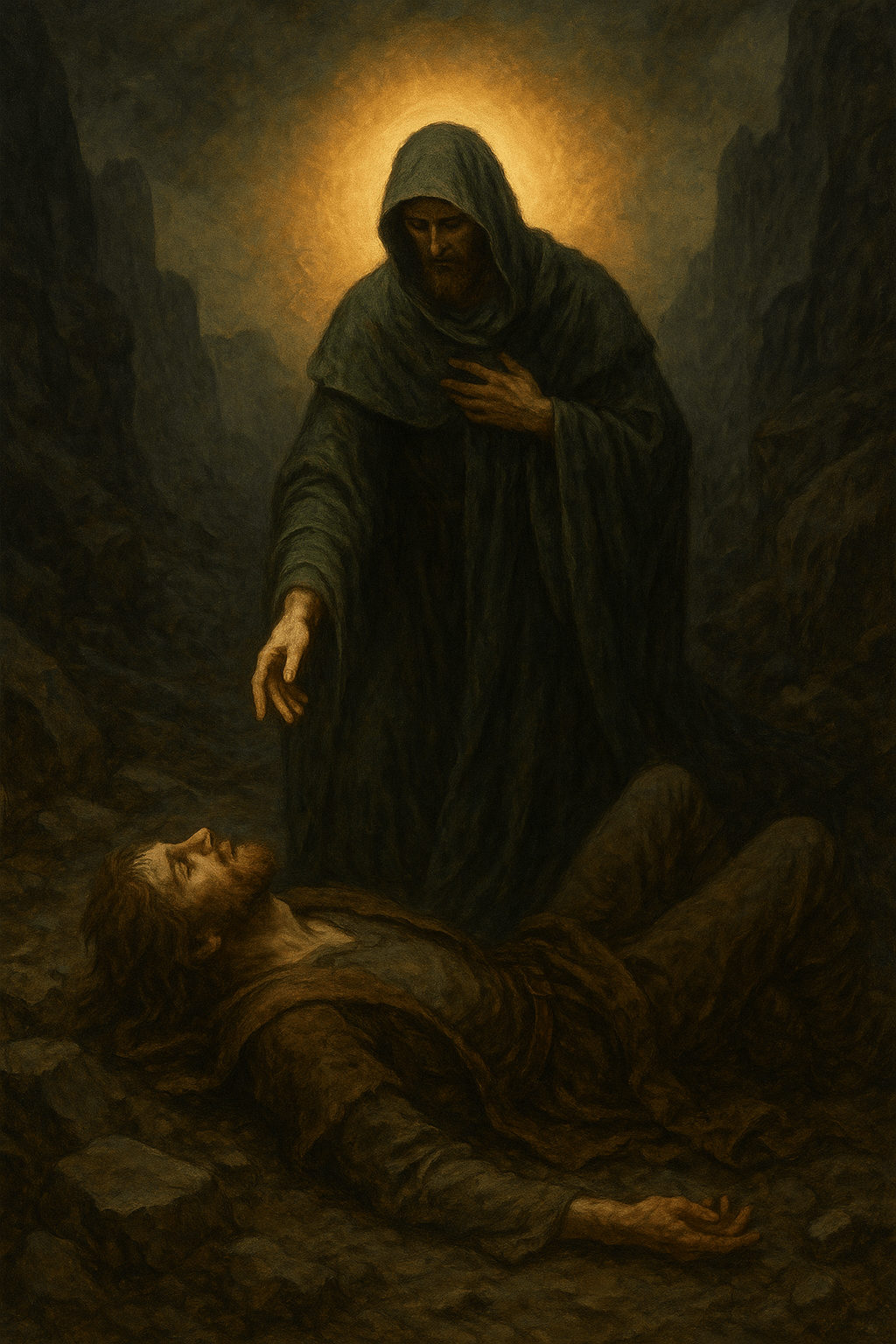
In the old tongues of elves and men alike, there are many names for origin, but only a few for the Fall. / Yet fewer still dare speak plainly of that strange and wondrous thing: grace—the mystery whereby what is broken may be made whole, not by its own striving,…
-

From Now to Eternity: Aion Moments
To make moments matter is not to control them, but to become present to their Presence. / Eternity is not after life — it is within life, hidden in the now, waiting to be found.
-

The Tree of Life: A Universal Theory of Shame, Law, and Grace
The Tree of Life—with shame as seed, law as trunk, and grace as fruit—is a universal structure. It just shows up wearing different clothes.
-

Mystics in Hadestown: A Dialogue on Control, Desire, and Divine Union
That’s when the dark night begins. When you find that the Church is not your home, but your hunger…
-

Reviving Hadestown: The Church (and I) as Eurydice
We, the Church, like to think we’re the rescuer. / But we’re often the rescued. / Not because we’re weak—but because we’ve forgotten who we are…
-

Muztmizt: Christ as the Antifragile Center of Identity
This impasse forces a deeper question: / Is it possible to sustain identity without abjection? / Can we imagine a structure of being that gains coherence through threat, contradiction, and even trauma — not by repressing it, but by metabolizing it?
 Radically Happy