Category: AI Art
-

The Missing “Spirit-Led Life” Manual
Pogue: (stands, exasperated) Stop! Do you hear yourselves? Grace. Effort. Dishes. You’re all clutching your agendas like brand logos. Meanwhile, the Spirit’s been standing right there the whole time!
-

The Law as Flesh 2.0
LAW: Flesh, you stand accused of indulgence, rebellion, and pride. / You have broken the moral code, offended righteousness. / Justice must be served…
-

Skit: “So You Want to Be His Disciple?”
“It strikes me that the church has rarely taken seriously the definition of discipleship used by Jesus in Luke 9:23, particularly in the Pauline sense of being crucified with Christ — daily! What might it look like to do that, without falling back into religious clichés?”
-

Does Anybody Really Want to Be HIS Disciple?
Now, I don’t know about y’all… but that don’t exactly sound like a marketing slogan. That’s not, ‘Your Best Life Now.’ That’s more like, ‘Come Die With Me, Season One.’
-

Wilberforce: We Need Perfume Breakers, Not New Wine Brokers
New wine is not a better law. It is not a more ethical framework, nor a more inclusive rulebook. It is the living presence of Christ Galatians 2:20—wild, liberating, uncontrollable. And He cannot be sold, only received. He cannot be managed, only magnified.
-

The Silver Law of Theocracy
The Iron Law tells us how institutions entrench themselves in power. / The Silver Law tells us how they lose their soul.
-

From Wine Broker to Perfume Breaker
MARY MAGDALENE: Brother Pierre. You savor your wine, but beware the wine broker’s trap: “No one after drinking old wine desires new, for he says, ‘The old is better’” (Luke 5:39).
-

How to Honor the Law: A Diaphoric Interview
I have spent my life teaching the moral vision of the New Testament — but I confess the question still stirs me. / Not just “How do I obey the Law?” / But how do I honor it — as Scripture, as tradition, as divine wisdom — without idolizing it?
-

Disseminating Diaphoris: Toward a Participatory Christian Education
Folks, this Diaphoric Participation—where the student actively lives into union with Christ, not just learns about it—is an intriguing remedy for our overly Platonic schools. Thoughts?
-

A God Who Needs: The Divine Archetype Behind Shame
Lewis: Then here’s my thought: shame is what divine need feels like when there’s no guarantee it will be met.
-

Danksgiving: A Ceremony for Holy Saturdays
Danksgiving is the sacred practice of giving thanks in the dark— before the miracle, without the music, still in the tomb.
-

Beyond Cathedrals: The Kingdom of God Is Like an Ecosystem
The Kingdom, as portrayed in Matthew 13, behaves less like a cathedral—centralized, curated—and more like an ecosystem: distributed, adaptive, antifragile, and oddly fecund.
-

Identificational Prayer: The Cross That Destroys Strongholds
I’ve learned that identificational prayer — standing in humility, identifying with those we pray for — is the most powerful prayer there is. / James says “the prayer of a righteous person has great power” (James 5:16), and in Christ, that righteousness is ours by grace, not by performance. /…
-

Singing to Shame: The Gospel According to K‑Pop Demon Hunters
K‑Pop Demon Hunters is not a cute fable. / It is an epistle written in fire and song. // It calls us to: • Lay down the Law as a mask for shame. • Stop exalting purity over love. • Die to our righteous personas, that Christ may live in…
-
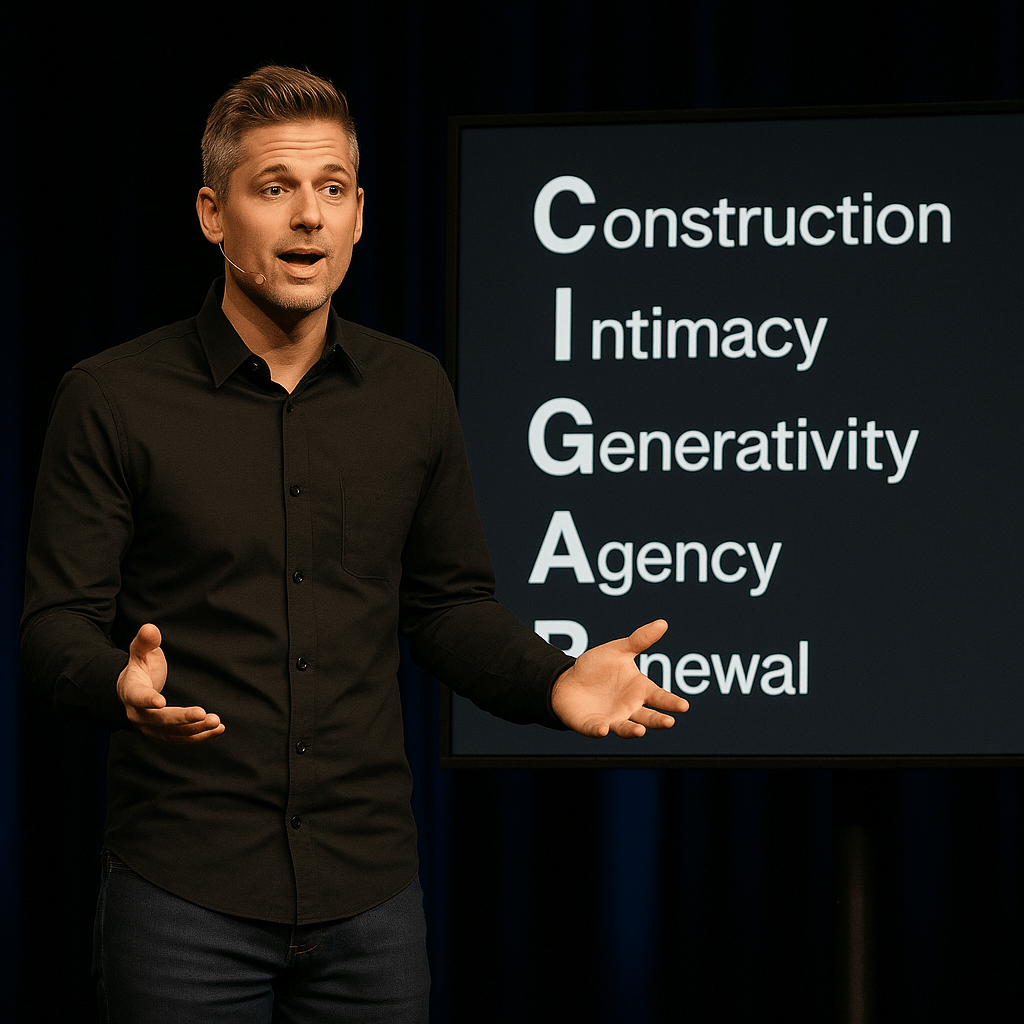
CIGAR: The Spiritual Spiral of Renewal
Construction. Intimacy. Generativity. Agency. Renewal. // Each one sounds great. But here’s the thing:/ Each phase feels like you’ve finally arrived—until it breaks you. / And that’s when the next phase begins….
-

God IN the Gaps: The Truman Show as Theological Allegory
Likewise, in our lives, the cracks in our own artificial constructs—be they cultural scripts, religious facades, or egoic performances—can become sites of revelation.
-

Diaphoris: Towards a Grand Unified Theology of Generativity
Whereas perichoresis describes the mutual indwelling of the Trinity in harmonious unity, diaphoris highlights the dynamic, recursive, and ecstatic agonism of divine being – a continual pattern of connection and separation that yields unbounded generativity…
-

Lavina’s Unfinished Cross: Restoring Grace to The Church
…the LDS Church may be one of the few institutions left with enough moral coherence, enough theological structure, and enough sacred memory for this drama to matter—for the world to watch and learn what repentance looks like….
-

Rest Before You See: A Theological Clarification on “Seeing vs Doing”
Here, “place of repose” is more than psychological; it is ontological and covenantal—a rest in Being itself, an invitation to abide in the Ground of Being. To propose “seeing” without first entering this repose may risk perpetuating the same depth-anxiety your essay seeks to address.

 Radically Happy