Use seeing and being seen by Jesus as the common thread from Mary to Emmaeus to Thomas to the Great Commission
ChatGPT Prompt (condensed)
Introduction: The Resurrection as Revelation
The resurrection of Jesus is not merely a historical miracle or theological anchor—it is a relational unveiling, in which wounded disciples are not just comforted but called, not just saved but sent. At the heart of every encounter is this:
Seeing the scarred hands of Christ—and being seen by Him—frees us from the captivity of death.
Not only the final death, but the daily deaths of fear, shame, doubt, and isolation.
From the garden with Mary Magdalene, to the road to Emmaus, to the locked room with Thomas, and finally to the mount of commissioning—resurrection unfolds through the eyes: Jesus seeing us, and us finally seeing Him. In each moment, His scarred hands are not merely evidence of past pain—they are invitations into new life.
1. Mary: Seen and Named in the Garden
“Jesus said to her, ‘Mary.’ She turned… and said, ‘Rabboni!’”
Mary stands at the empty tomb, lost in grief. She has seen angels, heard testimony—but remains bound by sorrow until she is seen and named.
In that moment, the resurrected Word speaks her name—and in doing so, she truly sees Him. Her sorrow is transfigured. She is not just comforted. She is commissioned: “Go to my brothers…”
Her witness begins not with apologetics but with intimacy.
2. The Emmaus Disciples: Burning Hearts, Opened Eyes
“He was made known to them in the breaking of the bread.”
Two disciples walk away from hope. Jesus walks beside them, unrecognized. First, He opens the Scriptures. Then, He opens their eyes at the table—not through power, but hospitality and scars.
They return to Jerusalem not only reoriented but resurrected in spirit. They had seen the Living Word interpret the Written Word, and now their lives become living witness.
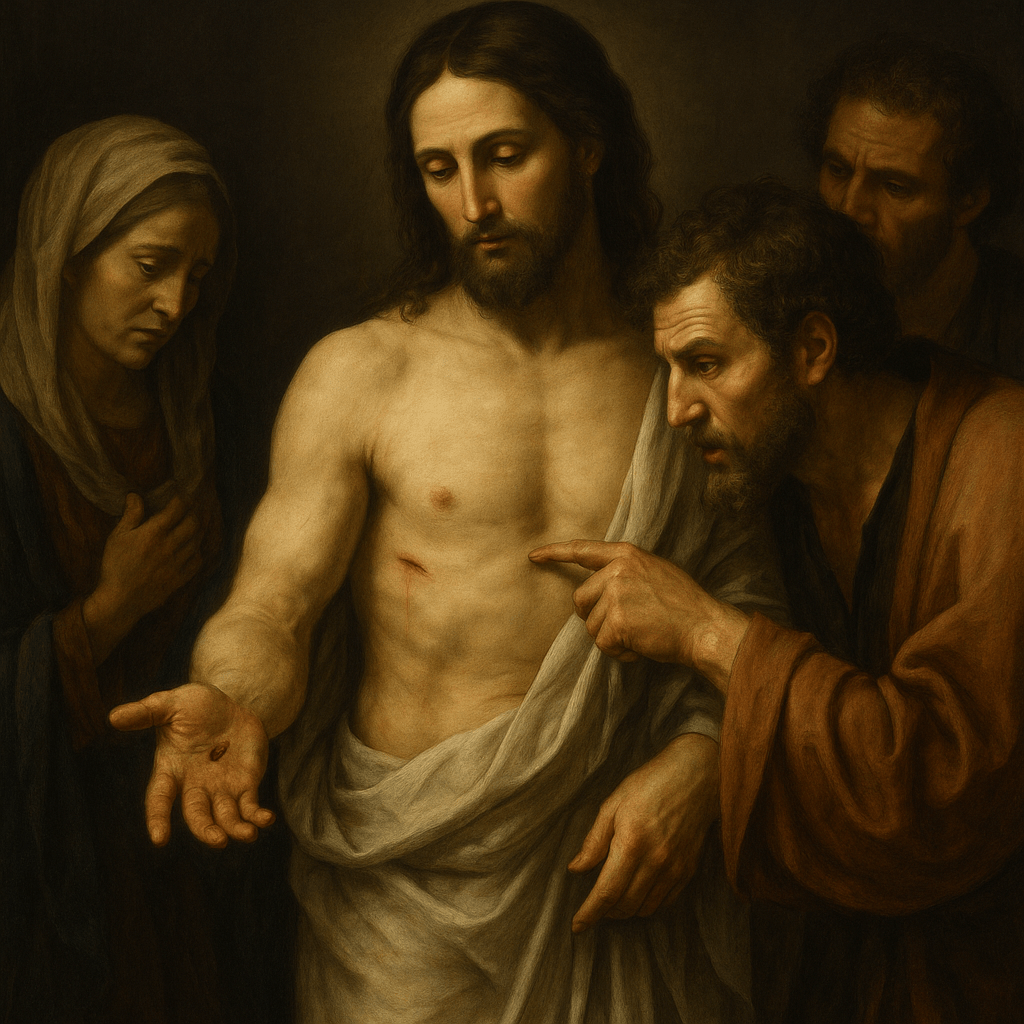
3. Thomas: Touched by Truth
“Put your finger here… Do not disbelieve, but believe.”
Thomas missed the first moment. He doubts, not from cynicism, but heartbreak. Jesus walks through locked doors—literal and emotional—and says, “Touch my hands.”
Thomas responds not with argument, but adoration: “My Lord and my God.”
His confession is the deepest because it was birthed from wounded honesty met with wounded grace.
4. The Eleven: Commissioned by the Wounded King
(Matthew 28:16–20)
(John 20:19–23)
“They worshiped Him… but some doubted.”
“As the Father has sent me, I am sending you.”
Even with worship, some doubted. Jesus doesn’t wait for perfect clarity. He breathes on them—not to relieve anxiety, but to activate mission.
The scarred hands that once held nails now hold authority, and they send fragile disciples to the ends of the earth.
Conclusion: The Scarred Gaze That Frees
From Mary’s garden to Emmaus’s table, from Thomas’s doubt to the mountain of mission, the thread is this:
We are seen by the Risen Christ. We see His scarred hands. And in that gaze, death loses its grip.
Resurrected words are not just spoken—they are embodied, carried in wounds, and activated in encounter.
Because:
- Seeing scarred hands heals grief
- Being seen by love restores identity
- Touching scars transforms doubt into witness
- Following wounded hands turns fear into mission
Christ’s wounds are not His shame. They are His calling card. And they become ours.
Scarred hands break death’s sting.
Seen by love, we rise sent.
 Radically Happy
Leave a comment