
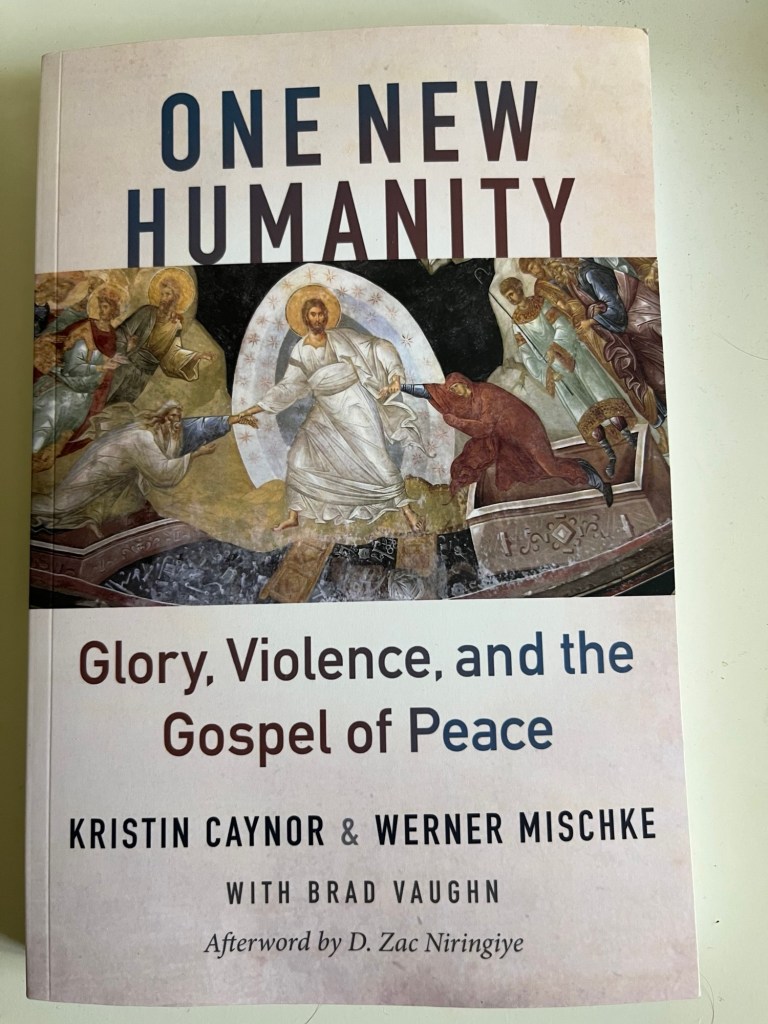
One New Humanity: Glory, Violence, and the Gospel of Peace — by Kristin Caynor & Werner Mischke
Interpret that through a diaphoric lens
ChatGPT Prompt
1 Introduction
One New Humanity: Glory, Violence, and the Gospel of Peace explores the transformative vision of human identity and community through the lens of Ephesians 2:13–17. The authors argue that in Christ, we gain a new, peaceable way of being human that confronts the shame and violence pervasive in our world.
Applying the concept of diaphoris, as introduced in Diaphoris: The Ecstatic Agony of Divine Glory, provides a nuanced framework to understand the themes presented in One New Humanity. Diaphoris emphasizes the sacred dynamic by which difference is borne, crossed, and ultimately reconciled, generating deeper communion.
2 Diaphoric Dynamics in One New Humanity
2.1 Glory Through Agony
The book presents glory not as static perfection but as a dynamic process involving suffering and reconciliation. This aligns with the diaphoric understanding of glory as movement—separation that creates space for love, otherness that invites encounter, and suffering that opens the way to deeper union.
2.2 Violence and Shame as Catalysts
The exploration of violence and shame in the book can be seen through the diaphoric lens as the “agonizing ecstasy” that propels the journey toward unity. These elements are not merely obstacles but integral parts of the process that leads to the formation of one new humanity.
2.3 The Gospel of Peace as Diaphoric Movement
The gospel of peace is portrayed as a force that confronts and transcends societal divisions. This mirrors the diaphoric process of bearing through difference to achieve deeper communion. The book emphasizes that in Christ, we gain a new way of being human that embodies this reconciliatory movement.
3 Conclusion
Viewing One New Humanity through the diaphoric lens enriches our understanding of its themes, highlighting the dynamic and often painful journey toward unity and peace. It underscores that true communion arises not from erasing differences but from engaging with them deeply and lovingly.
For a more detailed exploration of diaphoris, see: Diaphoris: The Ecstatic Agony of Divine Glory
Appendix A: Key Themes of One New Humanity
A.1 Glory
- Humanity’s longing for glory is central to its identity and spiritual hunger.
- Christ redefines glory as humility, relationality, and self-giving love.
- Glory is not about dominance but restorative presence.
A.2 Shame
- Shame arises when glory is absent or denied.
- The gospel addresses both individual and collective shame, not just guilt.
- Christ’s death and resurrection publicly honor the dishonored.
A.3 Violence
- Violence is more than physical—it is systemic, cultural, and spiritual.
- It is often rooted in shame and the quest for illegitimate glory.
- Jesus absorbs and overcomes violence through sacrificial peace.
A.4 Peace
- Peace is not the absence of conflict but the presence of reconciliation (shalom).
- The gospel of peace in Ephesians confronts Roman “Pax Romana” with Pax Christi.
- True peace unites hostile groups into a single, new humanity.
A.5 Reconciliation
- Reconciliation is not assimilation but union across difference.
- The Cross breaks down dividing walls of hostility.
- The Church is called to embody reconciled community.
A.6 Humanity
- The “new humanity” in Christ is the restoration of God’s original intent.
- Jesus as the “last Adam” reconstitutes human identity through obedience and love.
- Human vocation is reimagined through communal glory and peace.
A.7 Theological Praxis
- The book blends theology with real-world narratives (e.g., Rwanda’s healing).
- It critiques church growth models that ignore multiethnic reconciliation.
- A call for embodied peace-making as central to mission and discipleship.
 Radically Happy
Leave a comment