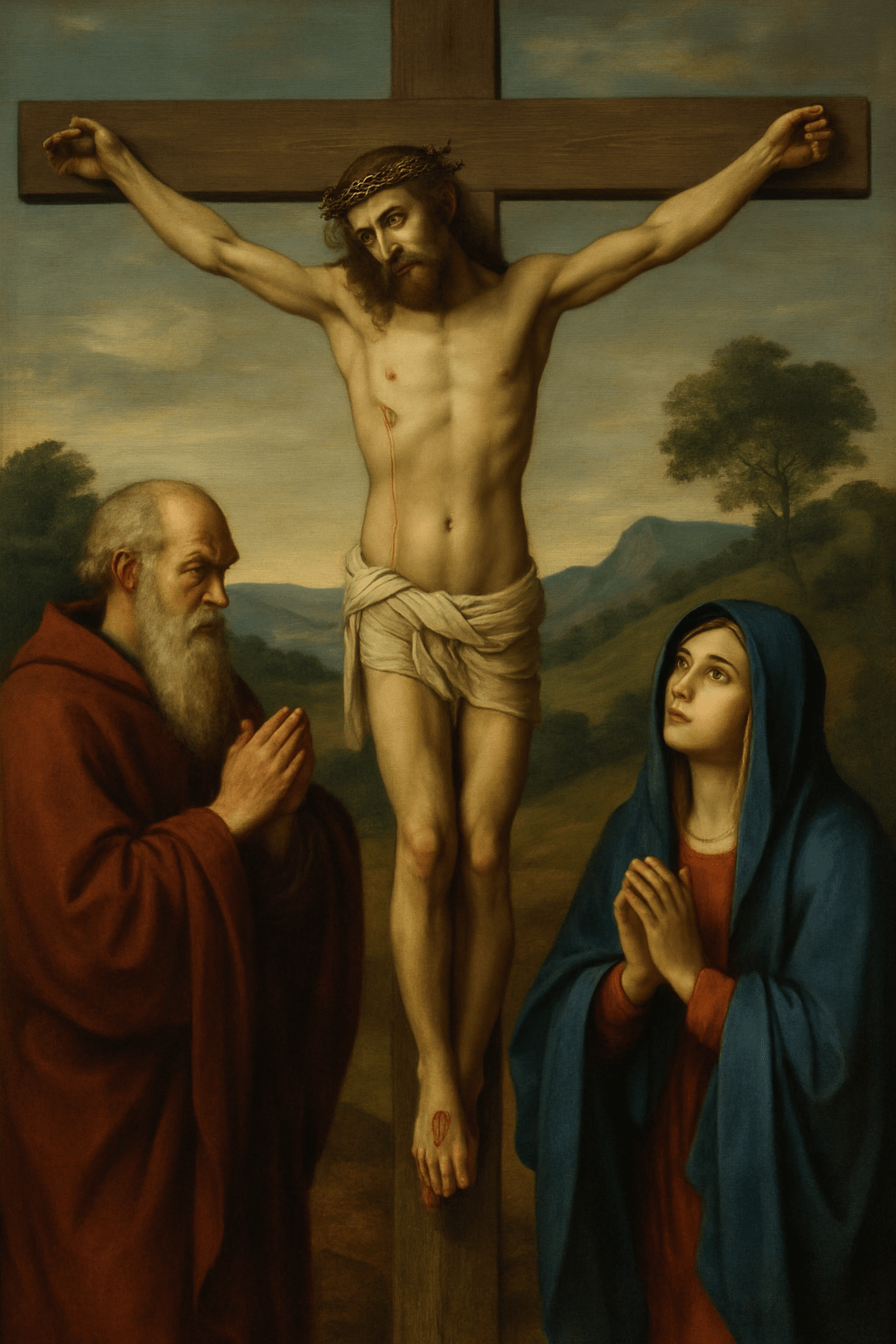
As Athanasius of Alexandria, explore Mitch Teemley’s thesis that Christ died so we could experience the forgiveness God has already given.
ChatGPT Prompt
About the Author
Athanasius of Alexandria (c. 296–373) was a bishop, theologian, and chief defender of Nicene orthodoxy during the Arian controversy. He is best known for On the Incarnation, a classic text that presents the Incarnation not as a response to divine wrath, but as the healing of human nature through union with the divine.
Dear Brothers and Sisters in Christ,
I write to you not from antiquity, but as one who still prays with you in the communion of saints — deeply concerned for the soul of the Church in your age. I hear many preaching Christ crucified, but often in tones that suggest the Father had to be persuaded to forgive you — that divine wrath had to be appeased by blood before grace could flow.
This, I must say with love, reverses the gospel.
1. The Problem Was Never With the Father
In my time, we fought to affirm that the Son is homoousios — of one being — with the Father (Nicene Creed). He is not a nicer version of God, nor a shield protecting you from divine anger. When you look upon Christ crucified, you are seeing the heart of the Father made visible.
“Whoever has seen me has seen the Father.” — John 14:9
God did not need the Cross to become forgiving. He forgave long before. What He longed for was your healing — your return.
2. Sin Deforms; Christ Restores
Sin is not simply legal guilt; it is a corruption of being (Romans 5:12). Like a beautiful icon blackened by smoke, humanity lost the clarity of the image of God (Genesis 1:27). Christ came to re-engrave that image — by taking on our nature and purifying it through life, death, and resurrection.
“The Word became flesh so that we might become God.” — On the Incarnation, §54
Forgiveness is not a legal transaction; it is an ontological transformation. The Cross is not a courtroom but a surgical theater — where sin is excised, and divine life is infused.
3. The Cross is a Cure, Not a Bribe
Your God is not a pagan deity demanding appeasement. He is a divine physician (Luke 5:31–32), entering the disease to heal it from within. Christ suffers not to satisfy wrath but to satisfy love — by enduring the full consequence of human alienation and healing it with mercy.
“By his wounds we are healed.” — Isaiah 53:5
4. The Scandal of Divine Forgiveness
Stop asking if you are forgiven. Ask whether you have received it.
“God was in Christ, reconciling the world to himself, not counting their trespasses against them.” — 2 Corinthians 5:19
Do you still cling to shame? Do you believe yourself unworthy? Do you project your own unforgiveness onto God? He is not waiting to forgive — He is waiting for you to be healed.
5. Reclaim the Gospel of Healing
Preach not merely that people are pardoned, but that they are being made new (2 Corinthians 5:17). The goal of the Cross is not divine satisfaction but human sanctification — not to escape hell, but to enter communion with the triune God.
“He became what we are, that He might make us what He is.” — On the Incarnation, §54
Closing Blessing
May you no longer preach a gospel in which the Father must be persuaded to forgive. Proclaim instead the scandalous mercy of God — that the Cross is not the price of love, but its purest expression.
“Behold what manner of love the Father has given unto us, that we should be called children of God — and so we are.” — 1 John 3:1
Faithfully in the service of the Incarnate Word,
Athanasius of Alexandria
Servant of the Uncreated Light
 Radically Happy
Leave a comment