As retold in the voice of Tim Keller, weaving themes of grace, self-righteousness, and brokenness into a redemptive story.
Introduction: A Father, Two Sons, and a Heart Divided
James was the elder brother. From a young age, he adored his father. The way his father treated everyone with dignity and kindness, the way he carried the weight of the family’s responsibilities—all of it inspired James. He would often follow his father through the fields, watching, learning, dreaming of the day he could take up his father’s mantle.
And then there was Gil, the younger son. Gil was charming, carefree, and wild. Where James stayed close to their father, Gil ran to the edges of the fields, always chasing something just out of reach. The father loved them both deeply, but it was clear to everyone that James wanted to be the “good son,” the one who would earn his father’s pride.
The Wound of Betrayal
One day, everything changed. Gil demanded his inheritance—a slap in the face to their father. It was as if he were saying, “I wish you were dead.” James was horrified, watching as their father, with tears in his eyes, gave Gil his share and let him go.
For weeks, James worked harder than ever, trying to make up for the empty place at their father’s table. He rose early to tend the fields and stayed late to account for every coin. But no matter what he did, he couldn’t fill the void Gil left behind. And so, James resolved: he would be perfect. He would never hurt his father as Gil had. He would be the son his father deserved.
The Return That Broke His Heart
Years later, Gil returned. James had heard the rumors—his brother had squandered everything on drink and women. But when Gil staggered into the yard, thin and broken, James felt a pang of hope. Finally, he thought, their father would see how different they were. He would see the value of James’s years of sacrifice and Gil’s utter failure.
But instead, their father ran to Gil, embracing him, weeping over him. Then came the feast: music, dancing, laughter. The fatted calf that James had dreamed of sharing with his own friends was slaughtered for the one who had wasted it all.
James stood outside the house, staring at the warm light pouring from the windows. His chest burned with anger. When his father came out to invite him in, James let it all out:
“I’ve slaved for you all these years, and you’ve never even given me a goat to celebrate with my friends. But this son of yours comes back after devouring your wealth, and you kill the fatted calf for him!”
The Quest for Righteousness
After that night, James grew colder. He threw himself into acts of service—not to honor his father, but to prove his own worth. He helped widows, mediated disputes, and upheld the law of the village with zeal. People admired him, but they kept their distance. James’s kindness always came with a shadow: the unspoken reminder that he was the righteous one, the one who did things the right way.
Even his father began to worry. One evening, as James was poring over the accounts by candlelight, his father said, “James, you’re doing too much. Rest.”
James bristled. “Someone has to keep this family’s name honorable. Someone has to pay for what Gil did.”
His father sighed. “I never asked you to pay, James. Everything I have has always been yours.”
But James didn’t hear him. He was too busy striving for a righteousness that his father had freely offered all along.
The Breaking Point
It happened on a stormy night. James was repairing the barn roof when his father called up to him. “James, come down! It’s too dangerous!”
“I’m fine!” James shouted back, refusing to leave the work unfinished.
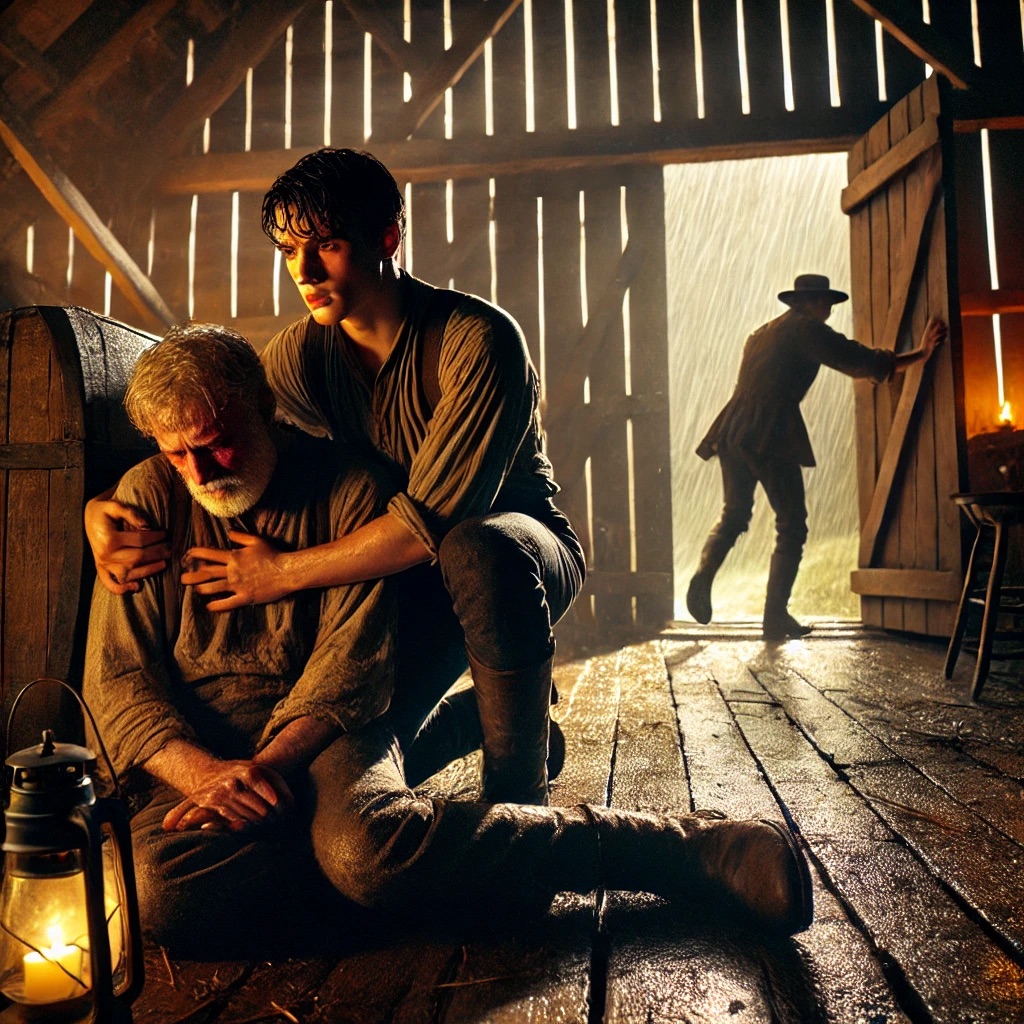
A gust of wind ripped a loose beam from its moorings. It came crashing down, and though James tried to stop it, it struck his father as he stood below. James scrambled down in horror, cradling his father’s limp body.
“I killed him,” James whispered to himself. “I killed him with my pride, with my need to be right.”
The Brother’s Grace
But then came Gil, running through the rain. He knelt beside James and helped lift their father into the house. The father was bruised but alive, smiling weakly as Gil and James tended to him.
Later, as the storm quieted, James broke down. “Gil, I’m the one who’s been lost all these years. I wanted Father to love me for what I’ve done. But it was never about love for him—it was about proving I was better than you. And now I’ve nearly destroyed him.”
Gil took his brother’s hands. “I thought I’d burned every bridge when I left, but Father still ran to me. Don’t you see, James? His love was never about what we’ve done. It’s about who we are—his sons.”
The Redemption
The next day, James went to his father, trembling. “I’m sorry. For everything. For thinking I could earn your love. For failing to see that it was always mine.”
His father pulled him close. “You were never lost to me, James. But I’m glad you’ve found yourself again.”
From that day on, James worked alongside Gil, not to prove himself, but to serve out of gratitude. And in the quiet moments, he would marvel at the grace that had been waiting for him all along.
Conclusion: The Heart of the Father
Tim Keller might close this story with a reflection:
Both brothers were lost. One was lost in his wild living, the other in his self-righteousness. But the father’s love brought them both home. This is the gospel: not that we earn grace, but that it finds us—even when we think we’re beyond saving.
 Radically Happy
Leave a comment