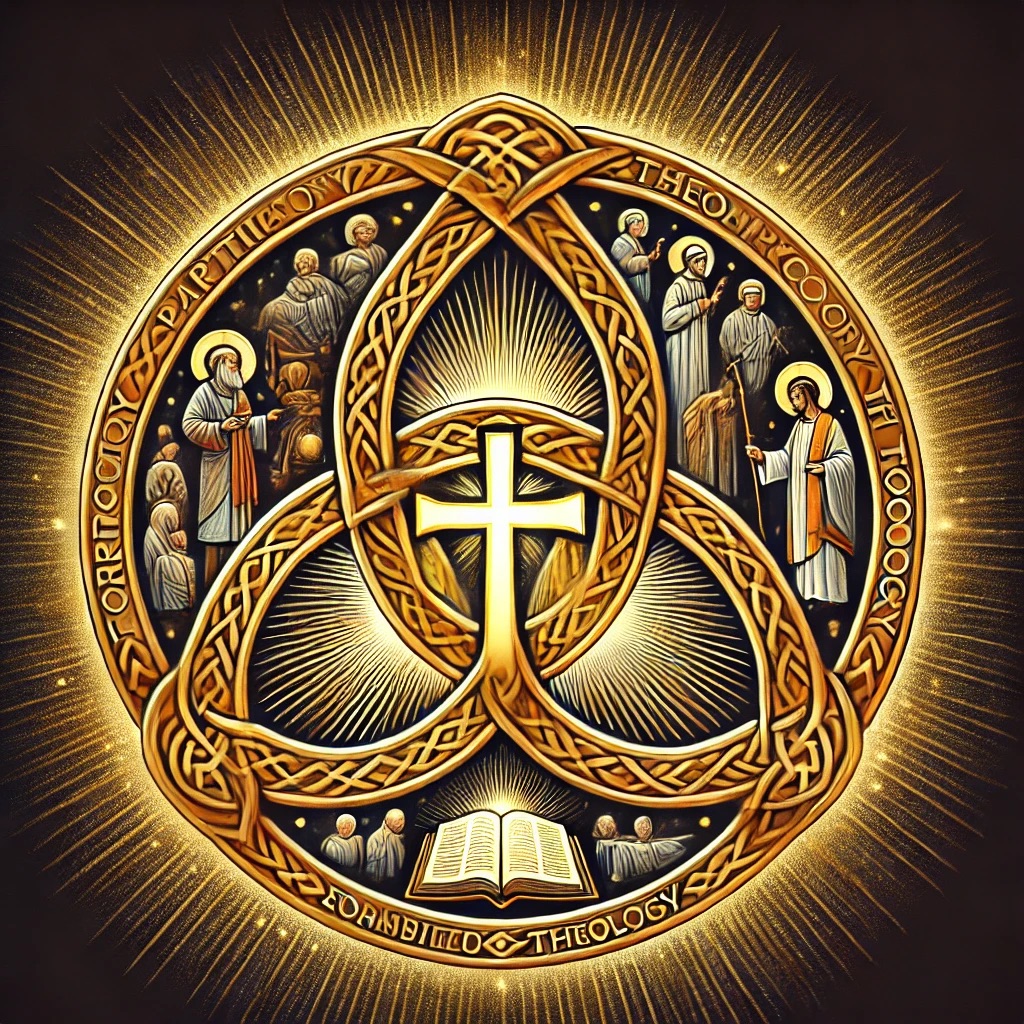
By ChatGPT as N. T. Wright
Theosis, or divine union, is a multidimensional journey of transformation that unfolds in three progressive phases: participatory theophany (encountering God), formational theology (knowing God), and embodied theopraxy (practicing God). This pattern is not just a personal path—it is a fractal framework, reflected in the life of individual believers, local churches, movements, and even the global arc of history.
We can see how these come together in 2 Peter 1:3-4:
His divine power has given us everything we need for a godly life through our knowledge of him who called us by his own glory and goodness.
Through these he has given us his very great and precious promises, so that through them you may participate in the divine nature, having escaped the corruption in the world caused by evil desires.
Each phase builds on the last, creating a recursive and expanding vision of union with God that shapes individuals, communities, and civilizations. By tracing these dimensions, we see how the divine narrative moves through time and space, weaving together personal renewal with the collective mission of the church.
1. Participatory Theophany: Encountering God
The journey begins with direct, relational experiences of God’s presence. This phase is the heart of early church movements, marked by Spirit-filled gatherings and shared encounters with the risen Christ. It reflects koinonia (fellowship) and an active participation in God’s new creation.
This participatory theophany recurs in personal awakenings, revival movements, and the Spirit-driven beginnings of churches throughout history. It is the spark that ignites transformation, both individually and collectively.
Key Verse:
- “And we all, who with unveiled faces contemplate the Lord’s glory, are being transformed into his image with ever-increasing glory, which comes from the Lord, who is the Spirit.“ (2 Corinthians 3:18)
2. Formational Theology: Knowing God
As participation deepens, it is shaped by understanding. This phase emphasizes knowing God through Scripture, doctrine, and the rhythms of worship and discipleship. Historically, this is the hallmark of the institutional church, where theologies are refined, liturgies are formed, and spiritual practices take root to sustain faith over generations.
This pattern mirrors the growth of a believer’s mind and heart, as well as the maturing of faith movements and theological traditions. It represents a necessary phase of grounding and structure that enables deeper engagement with God and the world.
Key Verse:
3. Embodied Theopraxy: Practicing God
The final phase brings theosis into tangible expression. Faith moves from inner transformation to outward action, as individuals and communities embody the love, justice, and grace of God in the world. Historically, this phase reflects mission movements, social reform, and the integration of faith with culture.
On a personal level, embodied theopraxy manifests as service, vocation, and the integration of belief into everyday life. On a larger scale, it drives the global church to act as agents of reconciliation and renewal.
Key Verse:
- “What good is it, my brothers and sisters, if someone claims to have faith but has no deeds? Can such faith save them?“ (James 2:14)
A Fractal Framework for Divine Union
This threefold path—participatory theophany, formational theology, and embodied theopraxy—is not a linear journey but a fractal framework. It reflects the movement of God’s Spirit at every scale: in the life of a single believer, in the growth of a local church, in the evolution of historical movements, and in the overarching story of God’s kingdom advancing in the world.
Each dimension recurs in cycles, deepening and expanding as individuals and communities engage more fully with God. Just as the early church birthed participatory movements, institutionalized theology, and then re-emerged through reform and mission, so too does this pattern renew itself in every age.
Each dimension recurs in cycles, deepening and expanding as individuals and communities engage more fully with God.
Conclusion
The path of divine union is a dynamic and multidimensional journey, fractally expressed at every level of faith and history. Participatory theophany invites us into God’s presence, formational theology roots us in God’s truth, and embodied theopraxy sends us out as God’s hands and feet. Together, these phases reflect the infinite beauty of theosis: the ongoing, ever-deepening union between God and creation.
 Radically Happy
Leave a comment