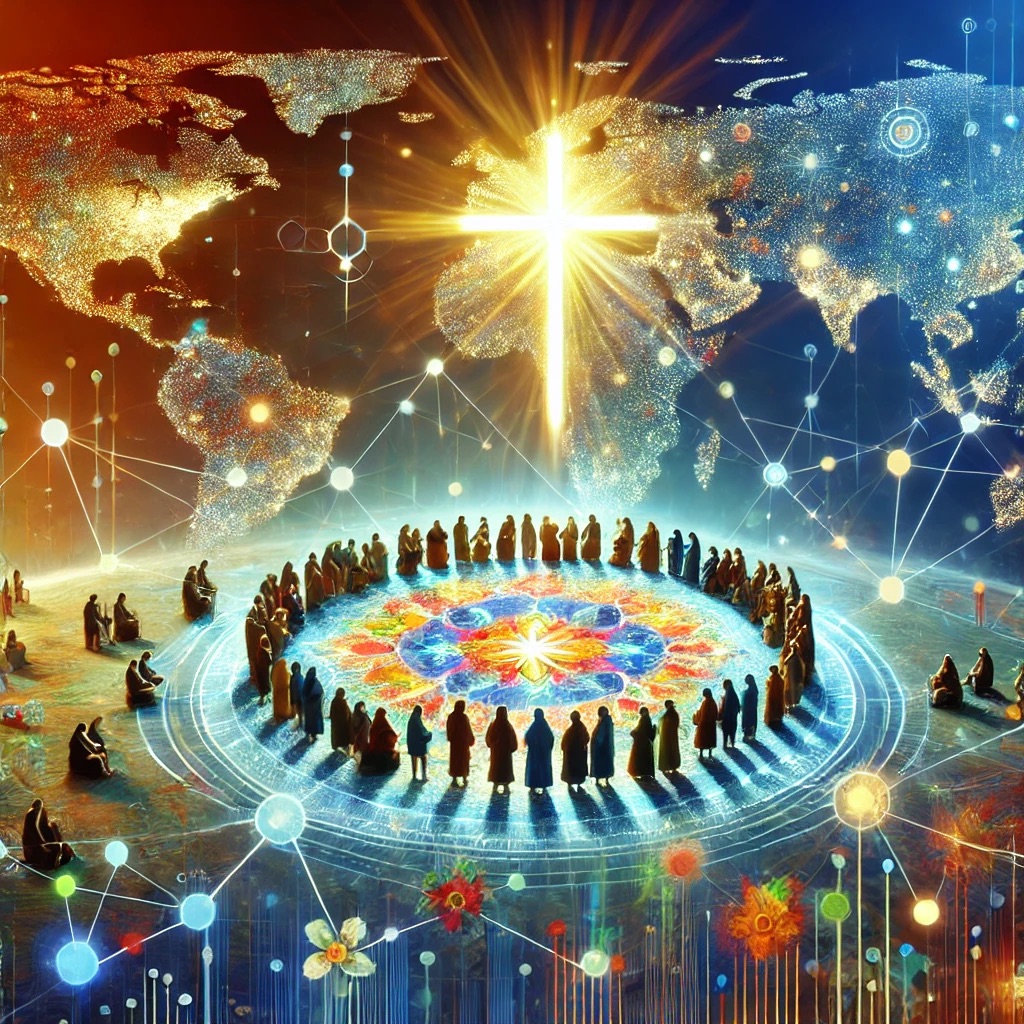
ChatGPT as Loren Cunningham
Looking back on decades of ministry through Youth With A Mission (YWAM), I am both humbled and grateful for the ways God has used a decentralized, relational model to spread His gospel to the nations. From our earliest days, we sought to empower ordinary people to do extraordinary things for Christ. Yet, as I reflect on the opportunities and challenges we faced, I believe the time is ripe for new models of what I call Incarnational Theopraxis.
This call builds on the lessons of YWAM’s journey while embracing the insights of frameworks like Littoral Spirituality, which emphasizes adaptability, authenticity, and shared spiritual practices. Together, they invite the Church to embody Christ in new ways, creating vibrant, agile, and connected communities for our time.
What is Theopraxis?
Theopraxis literally means “Practicing God.” It integrates theology—our understanding of God—and praxis—our lived actions. Theopraxis is not simply about knowing Christ’s teachings; it is about becoming like Him in His generative sacrifice, actively participating in His ongoing work of creation, reconciliation, and renewal.
Jesus Himself exemplified theopraxis. He didn’t merely teach about God; He revealed Him through His actions: feeding the hungry, healing the sick, and reconciling the broken. His life shows us that faith must take root in the daily realities of our lives and communities, shaping how we live, work, and serve.
Incarnational Theopraxis takes this further. It is about embodying Christ in the specific, local contexts where we live and serve while staying globally connected. This approach requires not only individual faithfulness but also systems and rituals that foster unity, accountability, and authenticity across diverse cultures and contexts.
Lessons from YWAM
YWAM’s journey was built on the foundation of local bases. These hubs were places where teams could live together, train, and serve their communities. While these bases were vital to our mission, they also created financial and social weight. Maintaining them often required significant resources and skilled leadership, which could become burdensome as we expanded into new contexts.
These experiences taught us the value of decentralized, relational models of mission. Yet they also revealed the need for greater agility. Today, we face an opportunity to build on this foundation while embracing tools that reduce reliance on fixed infrastructure and experienced management. By leveraging technology, we can create smaller, lighter-weight hubs that retain the relational depth of bases while eliminating many of their challenges.
Challenges and Opportunities
The opportunities and challenges of this age demand a fresh approach to incarnational theopraxis, one that builds on YWAM’s legacy while addressing the realities of today’s Church.
1. The Need for Connection
In an increasingly globalized world, the Church faces the challenge of remaining connected while honoring the diversity of local contexts. Relationships are strained by distance, language, and cultural differences. We need frameworks and rituals that unite us in mission, even when we are scattered across the globe.
Shared practices can serve as anchors in this process, allowing communities to remain authentically local while participating in a larger, connected body of Christ.
2. Technology as a Tool for Agility
Technology offers us the opportunity to create immersive and agile models of discipleship. Digital platforms can facilitate training, mentorship, and collaboration without requiring large bases or extensive management structures.
Instead of relying on experienced leaders to sustain operations, digital tools can guide spiritual growth, track progress, and enable peer-to-peer learning. Virtual hubs can connect communities across the world, allowing them to share wisdom, resources, and encouragement in real time. This radically lighter model opens doors for new generations to step into mission without being constrained by financial or logistical burdens.
3. The Rediscovery of Ritual
Rituals provide meaning, identity, and alignment. In a fragmented and fast-paced world, they are essential tools for fostering spiritual depth and communal unity.
One such ritual, which I call Encommunication, could serve as a cornerstone for incarnational theopraxis. Encommunication is a form of peer communion that emphasizes:
- Telling Our Stories: Sharing testimonies of God’s work in our lives.
- Speaking Reconciliation: Addressing conflicts and offering forgiveness.
- Consecrating Ourselves for Service: Committing to be “broken in service to others,” following Christ’s example of sacrificial love.
Encommunication is more than a ceremony; it is a recurring practice that shapes individuals and communities. It can mark milestones, transitions, inter-community gatherings, or moments of reconciliation, anchoring us in shared mission while equipping us to live it out in diverse contexts.
4. Leadership That Serves
Leadership models must shift from authority to humility. The world does not need more hierarchical systems but rather leaders who guide from within, modeling the sacrificial love of Christ.
Encommunication can also become a way to commission leaders, emphasizing their responsibility to serve and remain accountable to their communities. By framing leadership as a shared practice rather than a position of power, we can foster transparency, humility, and adaptability in a rapidly changing world.
5. Local and Global Collaboration
Incarnational theopraxis calls us to embrace both local autonomy and global collaboration. Local hubs can adapt their practices to cultural contexts while remaining connected through shared rituals and mutual learning.
This balance ensures that the Church remains a dynamic, Spirit-led movement rather than a static institution. Global networks of theopraxis communities can share wisdom, support one another in times of crisis, and demonstrate the unity of Christ’s body to a watching world.
A Call for Innovation
The world is crying out for the hands and feet of Jesus. From social unrest to environmental crises, the Church has an unprecedented opportunity to step into the brokenness with hope and action. But we must adapt. The systems and structures that served us in the past must evolve to meet the challenges of today.
YWAM’s journey demonstrated that decentralized, relational models are powerful but incomplete without deeper connection and intentional rituals. Incarnational theopraxis builds on this foundation, creating communities that embody Christ’s love with authenticity, humility, and boldness.
Encommunication is one such practice that can unite us, form us, and send us into the world with Christ’s love. But it is only a beginning. The Spirit is calling us to listen, to innovate, and to act. Will we rise to the challenge?
To God be the glory,
Loren Cunningham
Founder, Youth With A Mission (YWAM)
 Radically Happy
Leave a comment