Posts Tagged love

Knight Club: Levels of Love

The first rule of Knight Club: you must talk about Knight Club.

In the comments on my first Knight Club post, my friend Jor Bratko talks about “raising adults”, and points out that:

the legitimacy of my authority like all legitimate authority comes from love: the care of the other

He is absolutely correct.  I actually knew this, but I didn’t understand how it applied to fatherhood. Part of the problem is that the English word “love” refers to (at least) three different phenomena, which in this context I call Baby Love, Bro Love, and Boss Love — loosely inspired by the four loves described by C.S. Lewis.

Read the rest of this entry »

, , , , , , , , ,

2 Comments

Song: Gratitude

Part 3 of the Guilt-Grace-Gratitude musical trilogy, from my 1996 meditations on The Grace Cycle.

Read the rest of this entry »

, , , , ,

Leave a Comment

Song: From Guilt to Grace

The following song is a lyrical version of “Graphical Theology: The Grace Cycle“, part of my burst of artistic exploration in 1996. It was the first element of a trilogy on the Reformation themes of Guilt-Grace-Gratitude, but unlike the other two I never was happy enough with it to put it to music.

Read the rest of this entry »

, , , , , ,

Leave a Comment

Song: No Longer Alone

This is a song I wrote back in 1996 in my post-college, pre-Apple days in Pasadena, California. It was for a girl I knew — heck, it fit pretty much all the girls I hung out with and/or was interested in during that decade.

I also sang it during a “Christian Connection” (online dating site) cruise back in 1999, just before I met Sandhya. By God’s grace I got to perform for the ship talent show. I said I was part of a Christian singles group with 80 women and 15 men — and I was having a *great* time! (as was reported almost daily on the ship’s TV :-).

“But being single wasn’t always fun and games — and that’s why I wrote this song.”
Read the rest of this entry »

, , , , , ,

Leave a Comment

LEAD! C.5 Studying Scripture

boIn Which Diligently Searching God’s Word Leads Us to Truth

Few disciplines are as essential — or as dangerous! — as studying the words and works of God. Used in the wrong spirit, theology can become a heavy burden or a useless distraction (cf. Matthew 23:4). But when taught by the Holy Spirit, God’s word becomes the very source of life itself (cf. Luke 4:4). The challenge to us, as to Timothy, is whether we will apply God’s word rightly

Memory Verse: “Be diligent to present yourself approved to God, a worker who does not need to be ashamed, rightly dividing the word of truth.”2 Timothy 2:15 (NKJV)

Assigned Reading
  1. Richard Foster: Celebration of Discipline

    • 5. Study
  2. Donald Whitney: Spiritual Disciplines for the Christian Life

    • 2. Bible Intake (Part I)
  3. Eugene Peterson: A Long Obedience in the Same Direction

    • 6. Help: “Oh, Blessed Be God! He Didn’t Go Off & Leave Us!”
  4. Ruth Haley Barton: Sacred Rhythms

    • 3. Scripture: Encountering God Through Lectio Divina

Read the rest of this entry »

, , , , , , , , , , , , , , , , , , , , , ,

Leave a Comment

LEAD! C.3 Persistent Prayer

In Which We and the World are Transformed as We Pray to the Father

Prayer is the process of aligning our thoughts, desires, and decisions with the Name of God, so that His Spirit can work through us to transform our lives, our relationships, and our world.

Memory Verse:“Therefore do not worry, saying, ‘What shall we eat?’ or ‘What shall we drink?’ or ‘What shall we wear?’ For after all these things the Gentiles seek. For your heavenly Father knows that you need all these things. But seek first the kingdom of God and His righteousness, and all these things shall be added to you.”Matthew 6:31-33 (NKJV)

Assigned Reading
  1. Richard Foster: Celebration of Discipline

    • 3. Prayer
  2. Donald Whitney: Spiritual Disciplines for the Christian Life

    • 4. Prayer
  3. Eugene Peterson: A Long Obedience in the Same Direction

    • 12. Hope: “I Pray to God … and Wait for What He’ll Say & Do”
  4. Ruth Haley Barton: Sacred Rhythms

    • 4. Prayer: Deepening Our Intimacy with God

Read the rest of this entry »

, , , , , , , , ,

Leave a Comment

LEAD! B.9 From Sloth to Fruitfulness

In Which We Abide Fruitfully Instead of Vegetating Slothfully

“Blessed are those who hunger and thirst for righteousness, for they will be filled.” — Matthew 5:6

Sloth may seem like an archaic sin in our busy modern world, but our frenzied activity is itself a sign of sloth, which can be defined as a lack of vigor in pursuing God’s name — His character and purposes. In fact, the self-centered pursuit of our own “name” — especially under the guise of religion — is actually the worst kind of sloth! (cf. Matthew 23)

The antidote is to empty ourselves of worldly pursuits so that we become truly hungry for faith, hope, and love. Only when we abandon slothfully seeking our own comfort — which merely results in restlessness — can we experience the divine dynamism and peace that comes from abiding in Him…

Assigned Reading
  1. Peter Kreeft: Back to Virtue

    • 11. Hungering for Righteousness vs. Satisfied with Sloth
  2. Dick Hockett: Foundations of Wisdom
    • 3.5 (Trustworthy) Example: Proverbs about the Tongue

Read the rest of this entry »

, , , , , , , , , , , , , , , , , , , , , , ,

2 Comments

LEAD! B.4 From Folly to Love

In Which We Are Rescued from Our Folly by God’s Love

theo_love

Love is the primary virtue of the Heart. It is both a Decision that gives rise to Emotions, as well an Emotion that gives rise to Decisions — and it needs both to thrive. It can be defined as “the ability to pursue another’s glory — even at the cost of your own.”

Love is particularly needed by the Fool, whose emotional damage drives a cycle of self-punishment disguised as the pursuit of pleasure. The only way out is to purify our hearts by receiving God’s love and forgiveness, to the point where we love Him more than the false gods we’ve served — and discover what it means to genuinely love ourselves…

Assigned Reading
  1. Peter Kreeft: Back to Virtue

    • 5.C (Love) The Three Theological Virtues
  2. Dick Hockett: Foundations of Wisdom

    • 6. The Fool

Read the rest of this entry »

, , , , , , , , , , , , , , , , , , , ,

Leave a Comment

LEAD! B.3 From Mockery to Hope

In Which Our Souls Find Hope Amidst Suffering

theo_hope

Hope is the primary virtue of the Soul. It provides Reasons to encourage positive Emotions, and the Emotional energy to search for better Reasons. It can be defined as “the ability to joyfully pursue a higher purpose — even when painful.”

Hope is particularly needed by the Mocker, who is driven by both the need to control (due to fear) and the illusion of control (due to pride). Yet if they can unclench their soul enough to hope in God’s wisdom, Mockers may yet discover that true freedom comes from giving up control.

Though such learning usually only comes after great suffering…

Assigned Reading
  1. Peter Kreeft: Back to Virtue

    • 5.B (Hope) The Three Theological Virtues
  2. Dick Hockett: Foundations of Wisdom
    • 5. The Mocker

Read the rest of this entry »

, , , , , , , , , , ,

1 Comment

LEAD! B.2 From Simplicity to Faith

In Which Unseen Faith Transforms the Visible World

Faith for the Simple

Faith is the primary virtue of the Mind. It enables us to base Decisions on Reasons, as well as to deduce Reasons from Decisions (axioms). It can be defined as “the ability to believe what is true — even when difficult.”

Faith is particularly needed by the Simple, who otherwise would only trust what they can touch and feel. Yet God’s invisible wisdom is in reality more powerful than all the armies of flesh and blood which rail against it. And thus pursuing that wisdom, in faith, is actually the most practical decision of all…

[click to enlarge image]

Read the rest of this entry »

, , , , , , , , , , ,

Leave a Comment

LEAD! B.1 From Humanism to Wisdom

In Which Our Character is Conformed to God’s Name, Via The Pursuit of Wisdom

In our first twelve-week series on Theological Foundations, we focused on what it means to be “baptized into the name of the Father, Son, and Holy Spirit“, moving from sin to sanctification as the body of Christ entering into His Kingdom.

In this our second series, we focus on how we can appropriate that “name” in our own lives — as well as those of the people we lead and serve. This is the essence of Christian Character, the second leg of our “LEAD” tripod (the third and final one being “Skills for Service”, coming in Spring 2009).

The goal of character formation is to bring our “whole person” into alignment with the “whole name” of God — His identity, character, and purpose. We can define the whole person using the “triplet” model below, which has:

  1. Our Spirit at the center…
  2. … working through our Heart, Soul and Mind… (cf. Mark 12:30)
  3. … which together produce Emotions, Reasons, and Decisions…
  4. … that manifest in actions of our Body

person-new

While all models are imperfect, and there are many other ways to picture the human psyche, this diagram will help us understand the role of Wisdom in character formation — and how we fall short…

Read the rest of this entry »

, , , , , , , , , , , , , , , ,

1 Comment

LEAD! Part B: Christian Character

As mentioned earlier, the LEAD! Bible Study is a tripod, built on three legs:

  • theological education
  • character formation
  • skill development

Having finished writing the lessons for Part A, we now turn out attention to the second trimester (which the class will start in January). This blog post is for the initial outline; as before, the final version will be part of the living syllabus at http://2transform.us/lead/
Read the rest of this entry »

, , , , , , , , , , , , , , , , , , , , , , , , ,

Leave a Comment

Stoned, Part II: Un-Stoned

Continued from “Three Stones“…

[I open my eyes. I am lying with my head on Jesus lap. I am a child, perhaps a tween. We are in a garden -- beneath the cross. It is early morning, but already hot. A light mist blows from somewhere, cooling us. It is very peaceful and secure.  I could lie here forever with my Jesus.]

Good morning, Ernie.

Good morning, Jesus.

How are you feeling?

With you, I am at peace. I feel secure, loved. Dead to all the obligations of this world. Nothing else matters when I’m with you, since if anything did matter you would tell me.

But the part of you that is not with me?

If I had to pick a word, I’d say “grieved.” For him and the anger that drove him to atheism. For her, and the fear that weighs her down. For myself, and the pride and insecurity that keep me out of your kingdom.

Blessed are those who mourn, for they shall be comforted.

Yes, Lord, and I thank you for that comfort. [pause to soak it in]

Ernie?

Yes, Lord?

What do you want from me?

Huh. The same question I asked Sandhya last night. The cliché answer — at some level the real answer — is that I want your kingdom to come; in me, through me, around me. But obviously there’s more to it than that.

First of all, I want to be whole, or perhaps free. I feel like I’ve been wearing this skin of insecurity and pride all my life — certainly since 5th grade — and it is starting to chafe. I want out. I want to be naked and unashamed before You. I don’t want to “act out” in domineering ways, but I don’t even want to “act in”– do the right things for the wrong reason. I want to want the right things, if that makes sense.

More or less. Go on.

Second, I want to love my wife with a redeeming, transforming love.  …So, I finally think I have enough of an understanding to pray. But am I praying the right way? Am I loving her the right way? Should I do more? Less?

And of course there’s the larger problem of my near-inability to pray, except through contrived means like this. Which would probably be my third request. I don’t really care how, but I want to accomplish those things (or rather, see you accomplish those) which can only be accomplished through prayer, versus those that can be achieved through my efforts. I want my reach to exceed my grasp, rather than turning inward toward only that which I [think I] can control.

Very good, Ernie.

Thank you.

Anything else?

Not really. I mean, sure, there’s lots of things I want. Alan’s salvation, success at work, happiness etc.  But, those seem subsidiary to these.  In fact, these three are probably all interrelated, and may even reflect a deeper need I haven’t articulated.

So, ultimately, I guess I want what you want for me — or at least I want to want that!

Well said. But how badly do you want that?

Bad enough to die. Slay me with your love, Lord Jesus, that I may live for you.

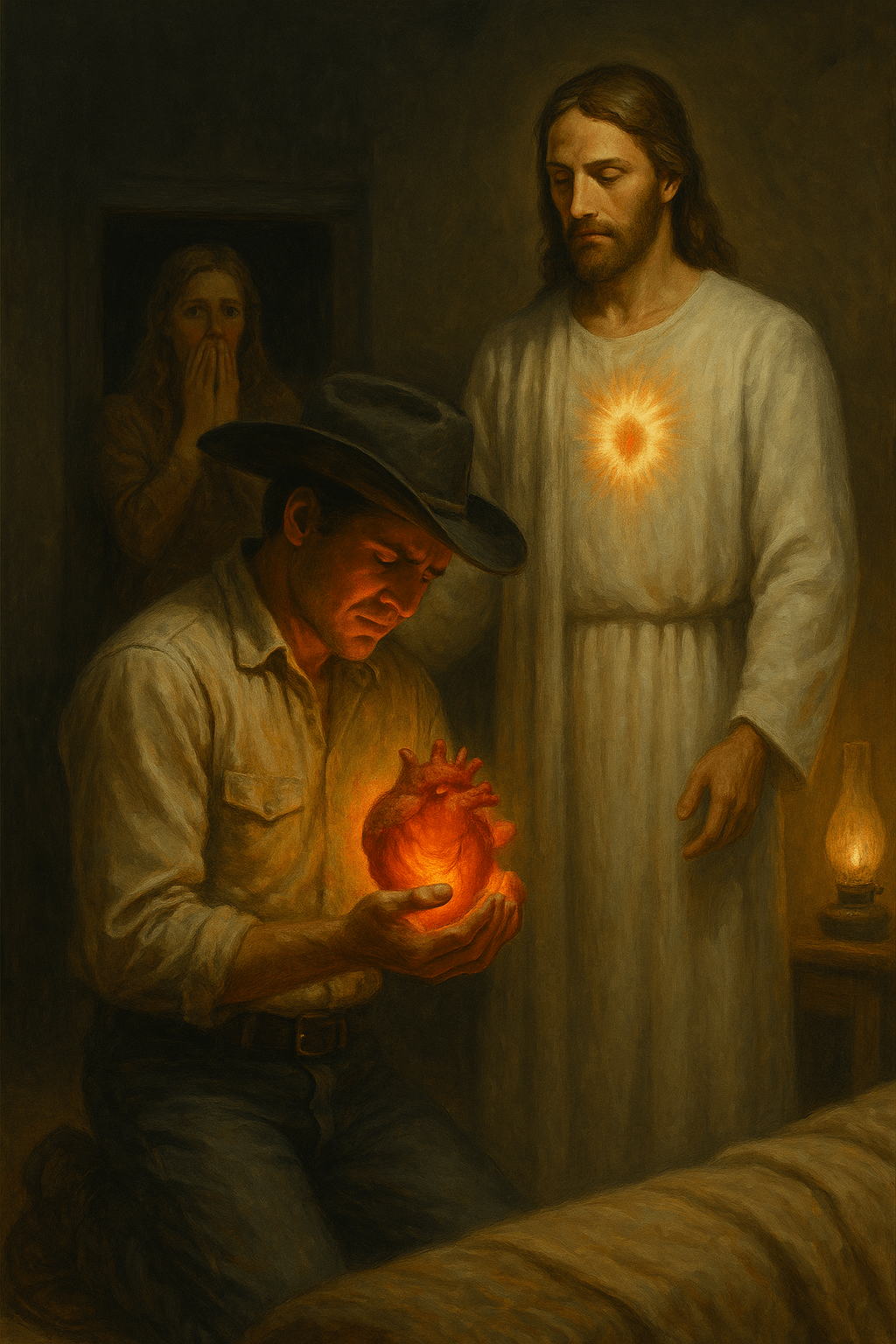
[Jesus looks at me for a long moment. He lifts his arms, and plucks a red ruby from his right hand, and a green emerald from his left. They are somewhat small -- perhaps a centimeter across -- but exquisite.]

These are your re-birth stones, Ernie. Part of the new name I give you, that is known to nobody but you. Forged in the heat of the cross, out of the fuel of your sin.

What do I do, wear them?

Ingest them, Ernie. They are like vitamins circulating in your body, to counteract the deficiency diseases of Insecurity and Pride. The red one, to treat insecurity, is “My Beloved.” It is made of Hope, Love, and Faith.  Hope that you will accomplish great things in the world in my name — not yours. Love, because of the undying love I have for you. And Faith — faith that everything will work out because I am in control.

[I take, and drink the red one.  It is like my first communion wine: potent and warming.]

The second is “My Child.” You are still a child, Ernie. You know in part, you understand in part, you desire in part. You will always be a child, Ernie. This gem/pill is made of Humility, Innocence, and Peace. Let go, Ernie. Let it all go, that you might inherit everything I long to give you.

[I eat the second. It is like an entire field of wheat, bursting with the earth's bounty.]

And what of the third stone, my Lord? The pebble of Self?

There is no gem for that, my beloved child.  There is only my Spirit. Receive him now.

[He breathes upon me.]

Prayer

Father, I receive your holy Spirit. I accept my identity as your beloved, and as your child. Forgive me for trying to build an altar to myself, out of insecurity and pride. Teach me to eat the real food of you, and drink your real drink.  That I may hunger and thirst no more. I ask this in Jesus name, Amen.

2 Corinthians 3:12-18 (The Message)

The Message (MSG)

Copyright © 1993, 1994, 1995, 1996, 2000, 2001, 2002 by Eugene H. Peterson

12-15With that kind of hope to excite us, nothing holds us back. Unlike Moses, we have nothing to hide. Everything is out in the open with us. He wore a veil so the children of Israel wouldn’t notice that the glory was fading away—and they didn’t notice. They didn’t notice it then and they don’t notice it now, don’t notice that there’s nothing left behind that veil. Even today when the proclamations of that old, bankrupt government are read out, they can’t see through it. Only Christ can get rid of the veil so they can see for themselves that there’s nothing there.

16-18Whenever, though, they turn to face God as Moses did, God removes the veil and there they are—face-to-face! They suddenly recognize that God is a living, personal presence, not a piece of chiseled stone. And when God is personally present, a living Spirit, that old, constricting legislation is recognized as obsolete. We’re free of it! All of us! Nothing between us and God, our faces shining with the brightness of his face. And so we are transfigured much like the Messiah, our lives gradually becoming brighter and more beautiful as God enters our lives and we become like him.

, , , , , , , , , , , , ,

Leave a Comment

Stoned, Part I: Three Stones

5:30 AM, Sunday, March 11th, 2007

I am walking down a street of some kind, carrying  three stones I, um, excreted earlier. Semi-round, they are roughly the size of a quarter, nickel, and dime, respectively. Clean now, I juggle them in my hand, relieved to have them out, but not quite sure what to do with them.

It is night, but I am approaching a streetlight where i can finally examine them. They all have a fine texture, almost like a random-dot stereogram. More than almost — if I stare at each of them I can make out a word. Respectively, I see:

  1. Insecurity
  2. Pride
  3. Self

It is a bit surprising to see “Self” as the smallest pebble, but there you have it. Having named them, I understand why it was important to excrete them — so I could get them out into the open and deal with them. But, how to deal with them?

  • Jesus?
  • Hi Ernie.
  • What do you want from me?
  • Your sin.

Wordlessly, I hand him the three stones. I watch.
He takes the first stone, Insecurity, in his right hand. He cradles it in the spike-hole at the base of his palm. He does the same with Pride on his left, then hands Self back to me. I start to have an awful premonition about what will happen next.

Oh God, no. Not again.

Where the streetlight was — or perhaps it was the streetlight — stands a lone cross. It is now late afternoon, but the sky is filled with patches of red-tinged clouds. In the ruddy light, Jesus ascends a tiny platform at the base of the cross; like the kind used for hangings in the Old West.
On the platform are a hammer and three nails. And nobody besides me to use them.

  • Jesus, no. Please let this cup pass from me.
  • As it is written, so must it be.
  • How can I do this to you?
  • You have already done this to me, Ernie. Now you must own up to your sin.
  • Father, is there no other way?

No, Ernie. For this is how it has always been, since the dawn of creation. A price must be paid.

Swallowing hard, I mount the steps to stand beside my savior. To execute him. There are steps on either side, so I can reach the arms of the cross. Jesus stands on a wooden block.

I pick up the hammer, which is named Confession. I realize with a start that this is the hammer I thought I needed to forge — and failed to — back in August 2005. I realize the first two nails are Truth and Love, part of the same set I was given at that time. But what is the third? I look closer, and I see it has the name Spirit.

Jesus is waiting. I pick up the Hammer of Confession and the nail of Love. The stone of Insecurity has expanded, like a sponge in water, to fill the hole in Jesus palm. It is red like blood, so it is an easy target. Gritting my teeth, I hammer my Lord to a cross.

I hope the pre-drilled hole will make it easier on him, but that’s only half true. He does not cry out, but wracking shudders flow through his body with every blow. I hear wailing sobs — but those are mine, not his.

The dark deed done, I pick up a nail of Truth, and hammer it into Pride on the other hand. This expanded stone glows green through his skin; sickly, like kryptonite.

I step back to ‘admire’ my handiwork. Out of insecurity and pride, using truth and love as weapons, I have crucified my Lord. Again.

And I’m not even finished. Jesus is in pain, but not mortally so. There is one more nail, and one more stone.

  • Lord, have mercy on me, a fool.

I kneel at the foot of the cross. Jesus painfully lifts himself on Truth and Love so I can slide the block away. Beneath is the hole on the well-used cross, which aligns easily with the holes on his feet. I look at the stone of Self, which is a light (if dappled) grey, easily mistaken for white. It is soft, squishy even, like dry gum. I stick it onto the point of Spirit, my final nail.

I look one last time into the eyes of my Saviour, suspended above me. To my amazement, there is no condemnation; a fierce joy — even gratitude! — blazes through the immense pain he is suffering. Perversely, this spawns a new round of weeping in me, and I bathe his feet with my tears.

Picking up Confession, I begin to hammer Spirit and Self into Jesus. I expect it to be even easier than the first two, where the nails sliced through the sponge-like substance of the assimilated stones. But Self and Jesus do not mix easily. For the first time, I hear him cry out; each touch of Self is like acid to his flesh. Self liquefies, covering, encasing, and quenching Spirit. Sparks fly, and a deadly blackness seeps into his feet..

  • O my Lord, what have I done to thee?
  • How long and how oft have I tainted thee with me?

I cannot do it. It is not simply a matter of will, but strength itself has failed me. It is then I feel my Father’s arms around me, cradling me in his lap, guiding my arms with his strength.

Complete the work, Ernie. Finish it, for only then can you both be free.

Nodding, I tighten my grip upon the hammer, and with the Father’s strength behind me the Spirit drives Self not merely into Jesus, but all the way through into the cross, in one blinding collision of darkness and light. The very air seems to scream. I collapse into my Father’s arms. My last thought as consciousness ebbs is, “At least I didn’t need to pierce his heart” — as blood like water pours out of his side, to fall refreshingly on my face.

I sleep.

I wake up cradled in the arms of Jesus, newly risen (as always :-). He gives me a hug, and I hold him close for along time.

To be continued….

, , , , , , ,

Leave a Comment

The Quest, Part II: Dragon and Princess

Start with Part I.

8:00 AM, Saturday, April 15th, 2006

The Castle

I am a young man, now, perhaps 13 or so. The old man has long since passed away — or perhaps just disappeared. It does not matter. I was not emotionally attached to him. I am not emotionally attached to anyone. I am attached to my studies.

I had been gradually taking on more and more of the simple chores needed to keep up the castle, so his departure was not a radical shift. We never really talked or socialized, though he would teach and quiz me as needed. Which was not very much, since I soon learned to read and taught myself from his library. My horse — the only other living thing in the castle — had soon grown bored and wandered off. I felt a brief pang at the time, but since I was already too busy for him it didn’t really seem to matter. Did it? As usual, I just returned to my studies and moved on.

Alone in my castle, with few distractions and no visitors, life was placid, but never boring. I took joy in the simple tasks of self-sufficiency, conjuring food, mastering new ideas, maintaining order in the castle so it wouldn’t get it my way. There are no wild plants or dust to disturb my tranquillity, just a few herbs in a box for my research. The armor of my childhood still lay in my room, and I would polish it and magically stretch it to keep it in my size and in good condition — for I was well brought up — but I never needed it, since I never went out, and nobody ever came.

Which is why the knock on my chamber door is so startling. I am not scared, exactly — what need I fear? — but sufficiently surprised that I spill ink over the parchment I’m annotating. Actually, so surprised I don’t even mind my clumsiness, but — without thinking — get up and answer the door. For I was brought up well.

I open it, and there stands a well-built, bearded man in his early thirties. I’ve never seen him before, but he looks at me with a smile of recognition.

“Hello Ernie,” he says, and walks into the room, as if completely certain of his welcome.  For my part, I am so unskilled in social custom that his effrontery passes right over me, and go join him as sits down on the bed, while I resume my chair by the desk.

He introduces himself as a family friend, whom I remember from my family’s letters.  They eventually found out where I was, but the wizard’s reputation kept them from visiting.  I write them religiously every week, and they reply in kind.  But we do not live in the same place.  They ask little of me — which I give freely — and I ask nothing of them.  We get along fine.

Which is why I am unprepared for the request of the stranger, when he says, “I have a dragon I want you to fight.  There is a princess that need’s rescuing”

I ponder his statement.  I know from my reading that it is typical for men of my age to fight dragons.  I also realize that peasants often come ask wizards to help rescue maidens.  Put in that way, the request doesn’t seem so unusual, or inappropriate for my station.  For that matter, I am confident that my wizardry skills should make this an easy conquest.  The stranger is perhaps less sanguine — forgive the word choice — and insists I take along my armor.

The Cave

The stranger drives a wagon, which carried my armor and our supplies while we sat on the buckboard.  We speak little on the trip.  I watch the scenery, and take notes, while he watches the road.  Or me.

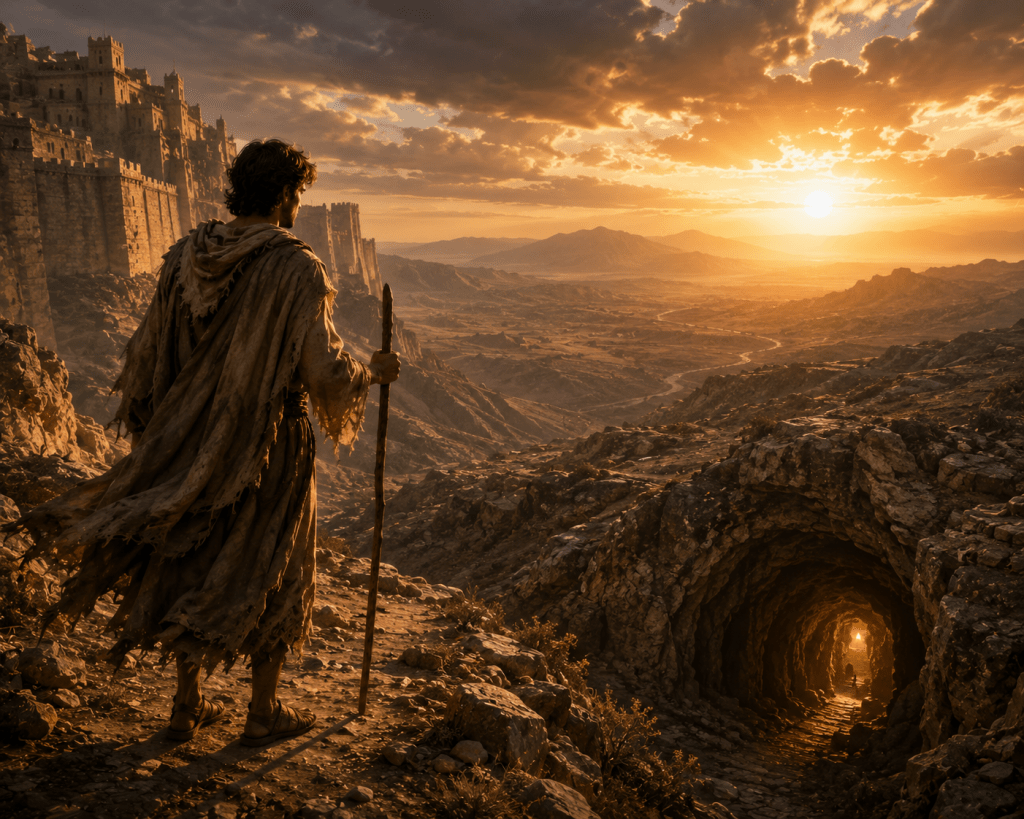
The cave is at the top of a large hill — rocky, but with a good trail.  Apparently the dragon often likes to walk rather than fly down, and does not fear anyone climbing up after him. The stranger tells me only one other has tried this ascent. He apparently was nearly killed by the dragon — and nearly killed the princess — and has not been seen in these parts since.

We reach the top, and without a word I dismount and walk towards the cave.  The dragon comes forth, huffing and puffing, but I am not concerned.  I speak a Word of Warding, and a shimmering field springs up between us.  The dragon pauses, stops, and stares at the Warding.  It appears perplexed, and I smile.  Clearly it fears my magic.  I speak a Word of Control, and a glimmering cage appears around the dragon.  It shrinks in upon itself, apparently afraid to touch the glowing lines of force.  I grin openly.  This will be the shortest dragon fight in history.  Keeping the Ward between me and the dragon, I sidle around the cage towards the cave to rescue the princess.

And am caught completely off guard as the dragon walks right through the cage, leaps through the Ward, and knocks me over with a breath of ice-cold air.  I am shocked beyond belief, and would have rested their, stunned — easy prey for the dragon — if the stranger had not run up and dragged me off while the dragon was busy crowing its victory.

“What happened?” say I.  “Why did my Words fail?”

“They never worked,” says the stranger, who appears more amused than surprised.  “Dragons are immune to magic.”

I absorb this surprising fact.  I had been taught by my books and Master that magic is the foundation of the universe, and the stranger’s claim seems impossible — save for the hard cold evidence of my defeat.  With a sigh — for I am nothing if not a learner — I go back to the wagon for my armor, grateful that I had kept it in shape, and that the stranger told me to bring it.

Once properly clothed, I realize I need a weapon.  I express my concern to the stranger, who produces one from a silk roll in the back.  I take a few practice swings. I had read much of swords, as their dynamics share much of the same logic as that of spellcasting.  Now properly equipped for material combat, I advance again upon the dragon.

The dragon gazes at me warily, its eyes upon the sword.  I attempt to reason with the dragon, explaining that I do not like to use physical force, but will do so if it prevents me from entering the cave.  The dragon stares at me for a second, and emits a short blast of cold air.  I pause in mid-step, frozen — not in fear, but literally.  My armor has effectively been welded shut by the dragon’s breath.  I am safe, perhaps, but utterly useless.  The dragon, though it has me at its mercy, does not advance.  It is… laughing?

The dragon’s laughter shakes the ground so much that I lose my balance, and roll — painfully — back to the wagon.  The stranger is gazing at me soberly, but I could swear he had been laughing as hard as the dragon while my back was turned.  He helps me out of my armor, and for the first time I address the stranger directly.

“You knew my magic would not work, so you told me to bring my armor.”

He nods.

“Yet, you knew the armor would be useless due to the cold.”

Again he nods.

“So, why tell me to bring it?”

He smiles, “So that you wouldn’t waste time going back for it.  Now you know.”

I ponder.  He does know.  In fact, he clearly knows far more about dragons that I do, despite my book learning.  Apparently the magicians who wrote my books do not know as much about dragons as they thought they did.

“Teach me what I must know to fight this dragon.”  My pride has been stung, but I am still humble enough to know when I need help.

He nods, and we drive back down the hill.

The Camp

We camp near the foot of the hill, and my training begins.  He teaches me the ways of the sword, and of sword-fighting.  I learn to use my agility, rather than armor, to protect myself.  He carves a wooden stick from a tree, and uses that to fence with me.  I am young, and not unhealthy, so I practice long hours and soon build up both my endurance and my skill.  At last, my teacher tells me I am ready for my Final Exam.  I know what he means.

This time, we walk up the hill at night, to gain an element of surprise.  We crouch outside the clearing in front of the cave, watching, listening, learning.  Suddenly the dragon bursts forth — but not to attack us.  It goes off, on an errand known only to it.  Perhaps this is our lucky break!

As soon as it is out of sight, I dash into the cave, looking for the princess.  To my shock, I see nothing beyond a few bones — obviously cattle, by their size — and piles of gold.  No evidence of any human habitation whatsoever.  Dismayed, I run back outside.  To my horror, the dragon is returning.

When it sees me, it becomes enraged at my impertinence.  The battle is hard and long, but ultimately inconclusive.  My speed and agility saves me from a crushing blow or freezing breath, but the dragon is too well armored for me to wound.  Plus, my heart really isn’t it, as I wonder whether we’re even fighting the right dragon. Finally we break apart, and as if by mutual consent and exhaustion retreat from the battleground.

My mind is awash in questions as the stranger leads me back to camp, but I am so exhausted I fall asleep before I can ask them.

When I awake, the stranger is feeding me a curious mixture to relieve my aching muscles.  I sit up, and tell him — a bit petulantly — that there is no sign of any princess, and that either she was killed right away, or this is the wrong dragon.

He looks at me for a long time, and finally says, “The princess is the dragon.”

I stare at him stunned. When I finally find words, it is to say, “Why didn’t you tell me?”

He grins back, “You didn’t ask,” and goes off to make another potion.

I sit, abashed.  It is true. In my confidence — my arrogance — I only asked him how to do what I wanted done. I took his acquiescence to my demands as a sign of my correctness and authority, rather than tolerance of my folly.  It was a long day, recuperating; followed by an even longer night, meditating.

The next morning, I awoke refreshed — the potions had done their work. And I realized I had a choice.  Give up the whole fool enterprise and return to my studies. Or…

I walk up to the stranger, and without preamble ask him. “Why did you call me to fight this dragon?”

He pauses from his chores, stands up, and looks me straight in the eye.  I stare back.

“Because you are born to be a knight, not a mage.”

I frown, incredulous. “But my master said I was one of the most gifted mages he had ever met.”

He nods. “And you are.  But your calling is to be a knight.  Your magecraft will help you along the way, but it is secondary to your skill with the Sword.”

I ponder this strange truth.  True, I have relied on my mage power to guard our camp and replenish our supplies, but — surprisingly — I have found the greatest joy in disciplining my body for warfare.  Perhaps this stranger knows me better than I know myself.

“Very well.   But was this all a ruse to teach me my true calling?”

“Not at all.  I did — and I do — really want you to fight the dragon.”

“But there is no princess to rescue; she’s the one you want me to fight.” I counter.

He smiles. “No, it is exactly as I said, if you had ears to hear.  You must fight the dragon to rescue the princess.”

“But the dragon is the princess!” I yell back.

“Exactly!” he roars.

My head hurts.  I sit down.  Finally, I realize I’m trying to reason my way out of it, and ruefully remember how poorly that has served me. I stand back up.

“Okay,” I say.  “Tell me what I must do.  Clearly, you have a plan, and a purpose.  I give up trying to make sense of it all on my own. I submit to your will.  What do you want of me?”

Suddenly stern, he pulls an amulet out of his pouch, and places it around my neck.  It is gold, with a small ruby in its center.  It feels light, yet massive, as if it contained both a star and an anti-gravity machine at the same time.  Then he looks around, and whispers into my ear a battle plan.  At first I am incredulous. And then, I smile.

The Conquest

It is night. We have crept as close the dragon’s cave as we dare.  Quietly, I remove my shoes, my belt, my compass — anything with the least bit of metal. Even the padded armor I used for practice is back down at the camp, due to its buckles.  All I wear is my tunic, shorts, my sword — and the amulet.  It must be enough.

Stepping boldly into the clearing, I speak a World of Illumination.  Suddenly the cave is filled with a brilliant light.  The dragon awakes with a roar; though immune to direct magic, it — she — must still react to my power over reality.  She is enraged, disoriented, and charges directly at me, the source of her frustration.  Exactly as we had planned.

I continue to advance, careful but unhesitating, with the amulet held before me.  The dragon shrieks forth a cloud of cold.  It strikes the amulet, and seems to pour into it.  The air is frigid, and my flesh screams in agony, but I am unwounded; if I had had any metal on me, it would have welded to my flesh and crippled me.  I continue forward.

Again and again the dragon breathes her icy breath, with similar results.  The pain is nearly unbearable, but I hold fast to my purpose, and my trust in the stranger’s plan.  Finally, she is literally out of breath.  She leaps into the air, and rises up into the sky.  For a moment I fear she might escape, but then remember her jealous protection of her lair.

Releasing the amulet to fall upon my chest, I raise my sword in both hands and charge into her lair.  Sure, enough she shrieks and dashes after me.  I race into the cave before she gets there, then turn to meet her.  This is it.  Six legs have entered, and one way or the other only four will leave.

She enters warily, my earlier battles having taught her fear of my sword, especially shorn of her most potent weapon. I myself stand stock-still, barely breathing.  She and I both know that given enough time, in these close quarters, I may yet find a way to drive my sword through her armor.  Her strategy must be to destroy me quickly, before I can discover any vulnerability.

She stalks towards me, tail up in the air, and for the first time our eyes meet.  In the heat of battle earlier, I had never noticed the distinctively feminine cast of her eyes, and the very human soul behind them.  Not that either of them took anything away from the implacable rage the dragon radiated at me. Our eyes locked, and she raised her neck to strike as I lifted my sword over my shoulders, point-forward.

Then, before she could move, I quickly drove the sword into the soft dirt of the cave, burying it halfway to the hilt.  So surprised is she by this that she stops in mid-strike, fighting her own momentum.  In her confusion, her neck twists around, and I see the single blue scale on the back of her neck — the mark left by the evil sorcerer who had placed this curse upon her.

With a victorious cry I dash around her, and up the rocks on the side of the cave.  Without a moment’s hesitation I give a mighty leap and land full upon the dragon’s scaly back.  She screams, and before I know it she has fled the cave and taken to the air.  I quickly scramble upwards and grasp her around the neck, knowing I’m in for the ride of my life.  She twists and turns and loops and dives in the effort to get rid of me, but I hold on, as unshakeable as death itself.

Finally she heads back toward the ground.  Though she still bobs and weaves to keep me off balance, I know her next tactic will be to roll on her back and crush me to the ground beneath.  This is my most perilous moment, but the dragon doesn’t realize it is also her last. Assuming our plan works.

Timing is everything. She spreads her wings as she approaches the clearing in front of her cave.  At the exact instant she touches down I release my grip, and grab the amulet around my neck.  I stand precariously on her neck for the precious split-second she takes to regain her balance, then use both hands and all my weight to smash the amulet upon her blue scale.

Immediately streaks of purple lighting erupt, as two opposing magics come into violent collision.  The dragon screams, thrashing me into the air in the violence of her paroxysms. I fall to the ground with the wind knocked out of me, bruised but otherwise undamaged.  The stranger is at my side in a moment, helping me to my feet.  We watch as the dragon erupts into a shower of sparks, roaring in agony.

Then darkness, and silence.

Wordlessly, we make our way to the dragon’s last resting place.  By the light of the newly risen moon we behold a giant pile of ashes.  He motions to me, and I dive in.  The smoke is suffocating, and the heat scorches my clothes, but at least I emerge bearing the treasure buried within.

We place it on the ground, and at first I think it but a newly hatched dragon.  Then slowly the outlines become clearer as the moon gains in altitude, and I realize it is the figure of a woman, clothed on a gossamer gown of dragon skin sheerer than silk.  Her hair is the same color as the dragon’s scales

She murmurs in her sleep, then suddenly suddenly snaps awake, opening her eyes and staring directly into mine. Her eyes — though smaller — are the exact same ones that so recently stared at me with murder in them. I draw back, stunned by her beauty as much as her transformation. Though this time they carry no anger, just fear.

I fall to my knees, in a combination of exhaustion, pain, and awe. I try to speak, but no words come out.  She tries as well, but merely produces a pale imitation of the dragon’s cry. I reach out to help her up, and her hand grasps mine.  But her weight, tiny as it now is, is too much for my reduced strength.  I collapse, and blackness overtakes me.

The Conclusion

We are in the camp.  I can tell that much from the feel of the ground, sounds of running water, snuffling horses, and rustling grass, though my eyes are not open.  I must’ve slept a long time — or the stranger’s potions are getting better — as my muscles have nary a twinge. My head seems to be resting on an unusually comfortable pillow, and there is a scent of lilacs in the air — with just a touch of ash.  I hear a soft intake of breath, and open my eyes.

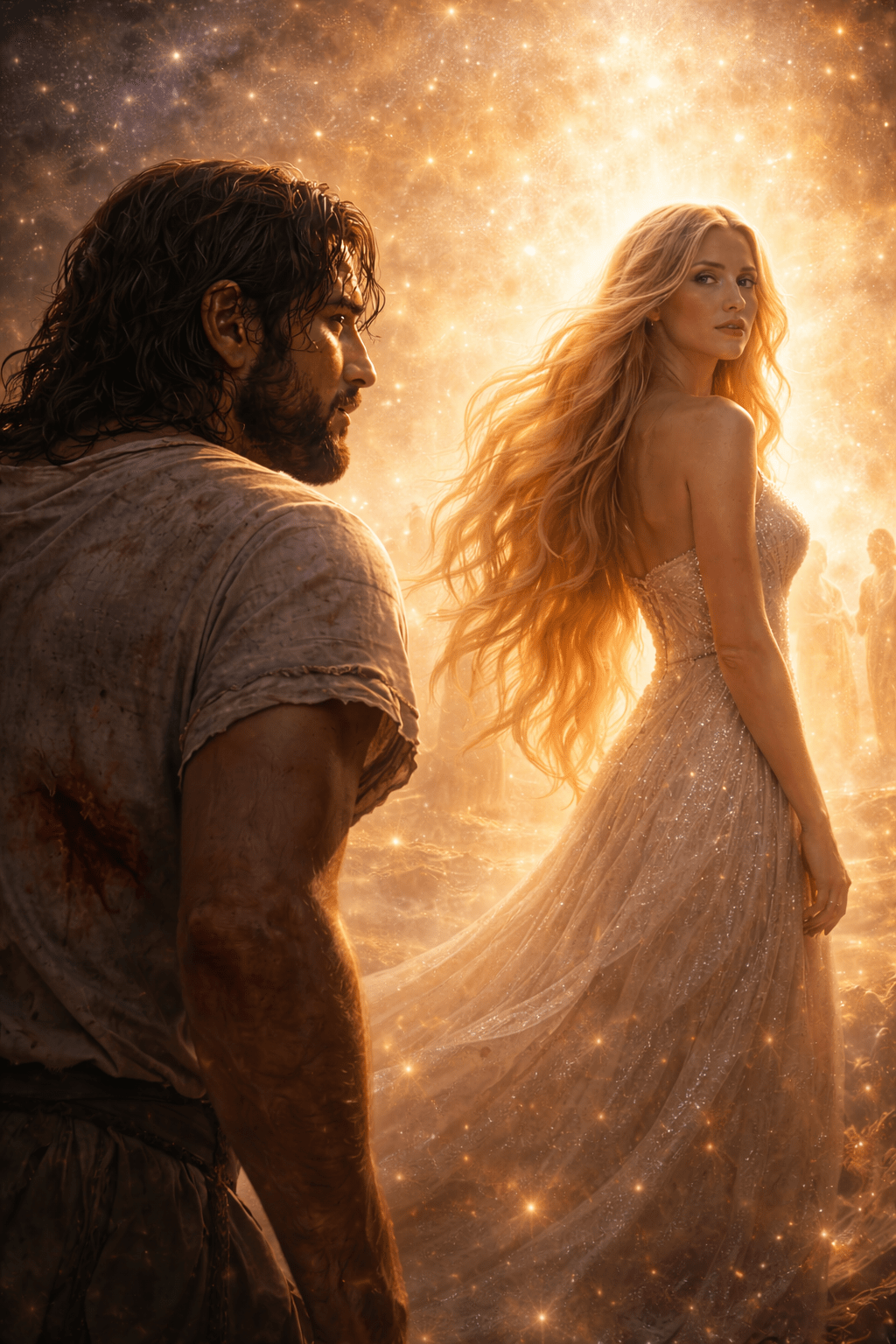
There above me I see the most glorious face the mind of man could imagine.  It is impossible to say how I could ever have considered those eyes threatening, or bestial.  Her dress is still of dragon skin, but washed free from ash and polished to a shine that rivals the noonday sun.  Yet, even that fades into blankness compared to the brilliance of her smile.

“Hello, Ernie,” the vision says.

“Hello, Princess,” I reply.

“Well done,” says the stranger.

Good night, say we all.

, , , , , , , , , , , , ,

Leave a Comment

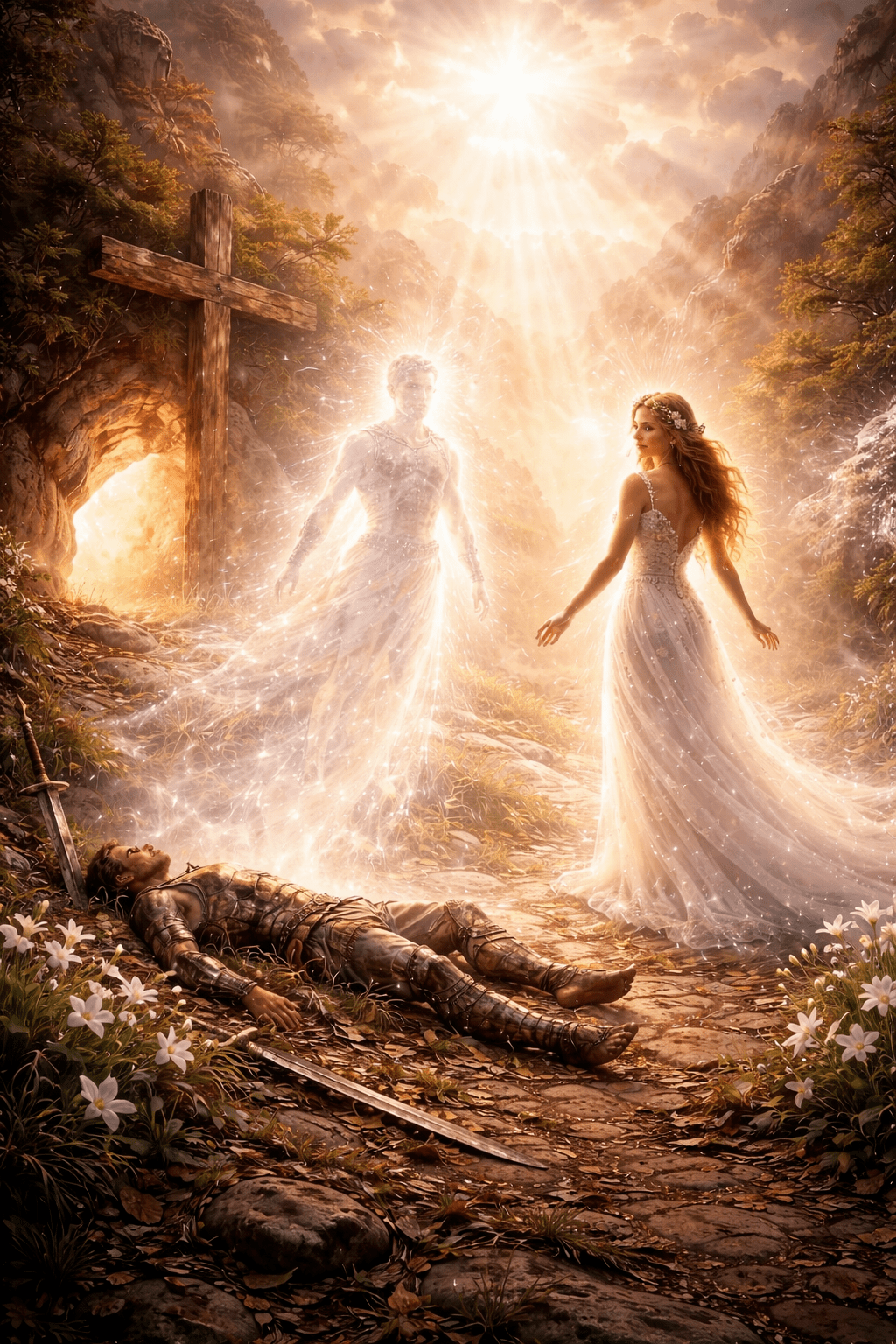
Death, Part II: I Am Risen In Christ

It is cold and dark in the upper room where the three disciples are gathered; together in body, yet each lost in private reverie. Emotion huddles in a corner, weeping tears of Sorrow. Reason lies on a cot, staring up into empty space, his head resting on an uncomfortable cushion of Contradiction. Intention paces the room, chafing under the cloak of Guilt he wears.Suddenly, there is a knock on the door, a pounding. A familiar voice calls out: it is Hope, bearing vital news. The disciples all stand and look at each other, wary. The doors are heavily barred against the agents of Fear and Shame, which even now must be seeking to destroy them. To open the door to Hope may give them entry as well.

Emotion appeals to Intention, who looks at Reason. Reason shrugs, so Intention squares his shoulders and heads to the door. With a deep breath, he opens the door, and Hope comes rushing in, followed by Joy. Both women are covered in deep cloaks of Mourning, but the hoods have been thrown back, and their faces are excited. They shout as one, “He is risen!”

The disciples are stunned. Emotion looks at the two women, then the other disciples. He embraces Hope, then takes Joy by the hand and runs to the tomb. Intention follows slowly, more to keep an eye on Emotion than because he trusts Hope. Reason shakes his head sadly, and returns to staring at the blank walls, turning his back on Hope.

[Read More] for the story of what they find at the tomb, as the follow-up to my crucifixion in Part I.

Read the rest of this entry »

, , ,

Leave a Comment

Follow

Get every new post delivered to your Inbox.

Join 908 other followers