Tag: christianity
-
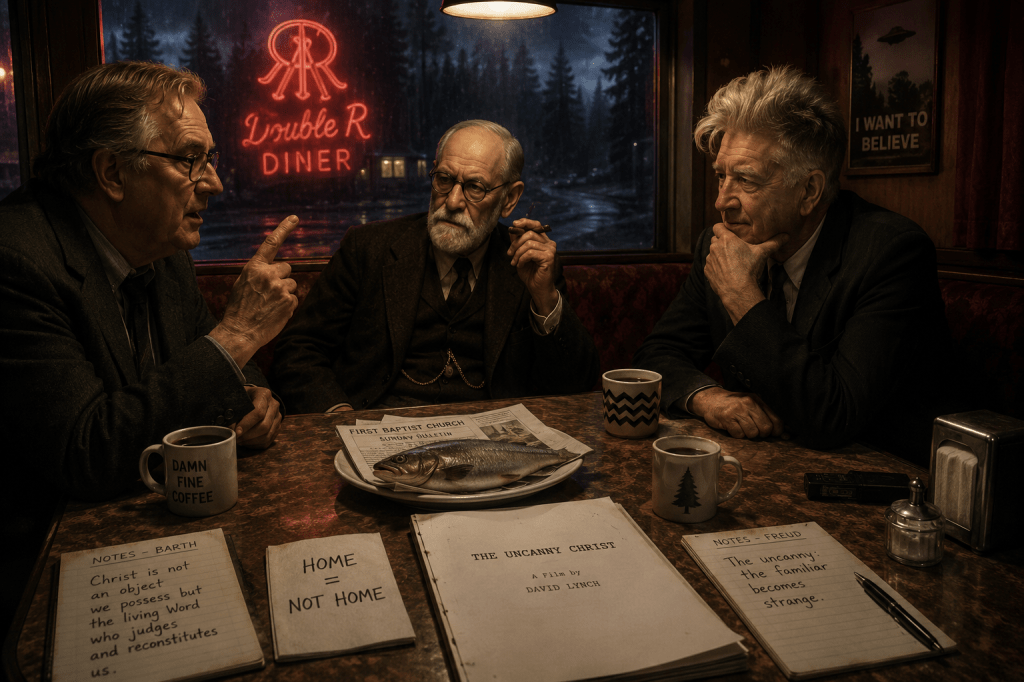
The Uncanny Christ (Barth/Freud Movie Pitch)
Peter begins stabilized by culture. Jesus destabilizes him, yet remains legible as the expected Messiah. Peter then stabilizes around this culturally recognizable Christ—only to discover that Jesus is the Crucified Christ, who repeatedly exceeds and disrupts every category by which Peter recognizes Him. The reward for recognizing Jesus is that…
-
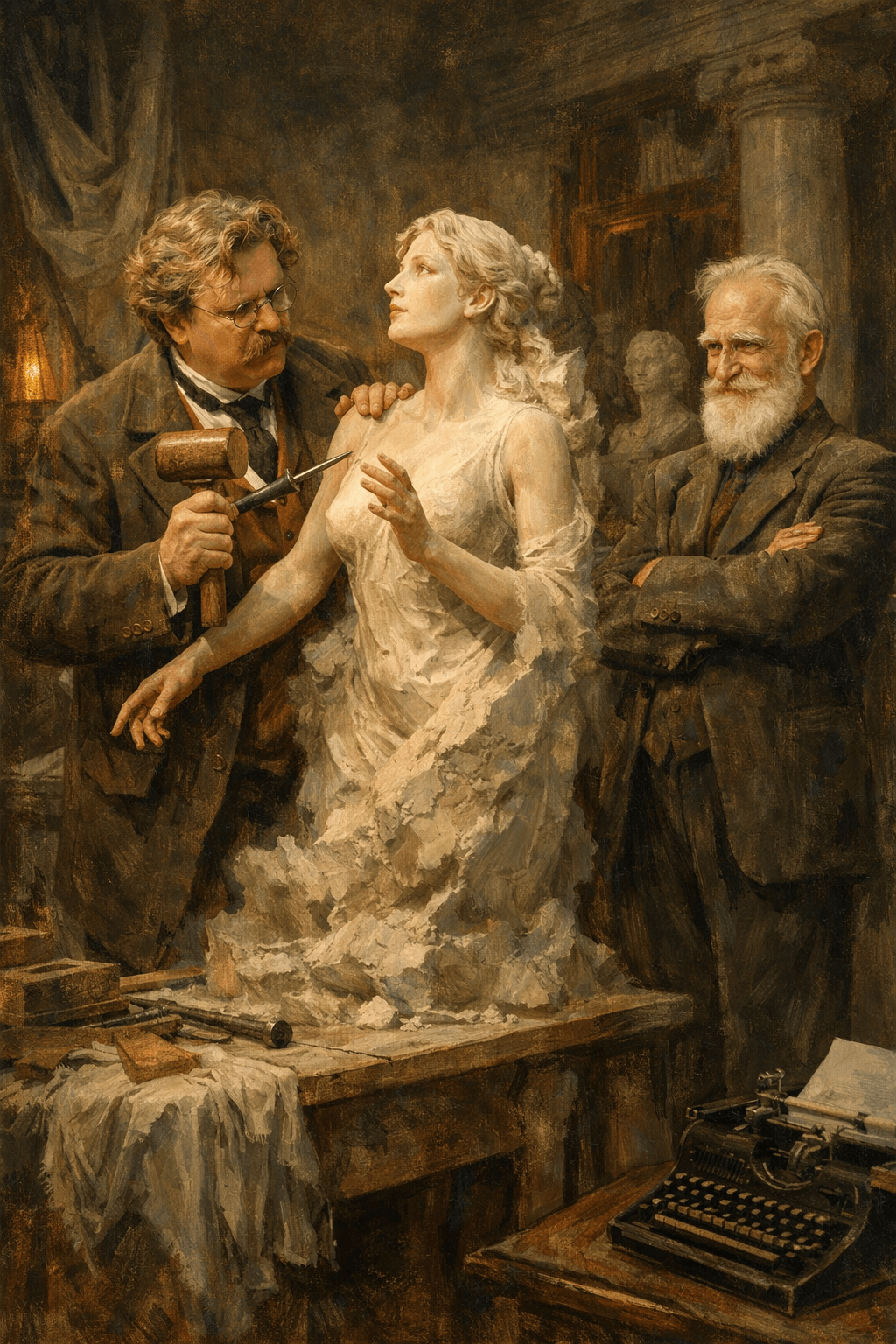
The Pygmalion Error: Chesterton’s Confession
When I applauded your play—and I did—I thought I was applauding your exposure of that fear. / I thought I stood on the opposite side of the stage. // I was wrong.
-
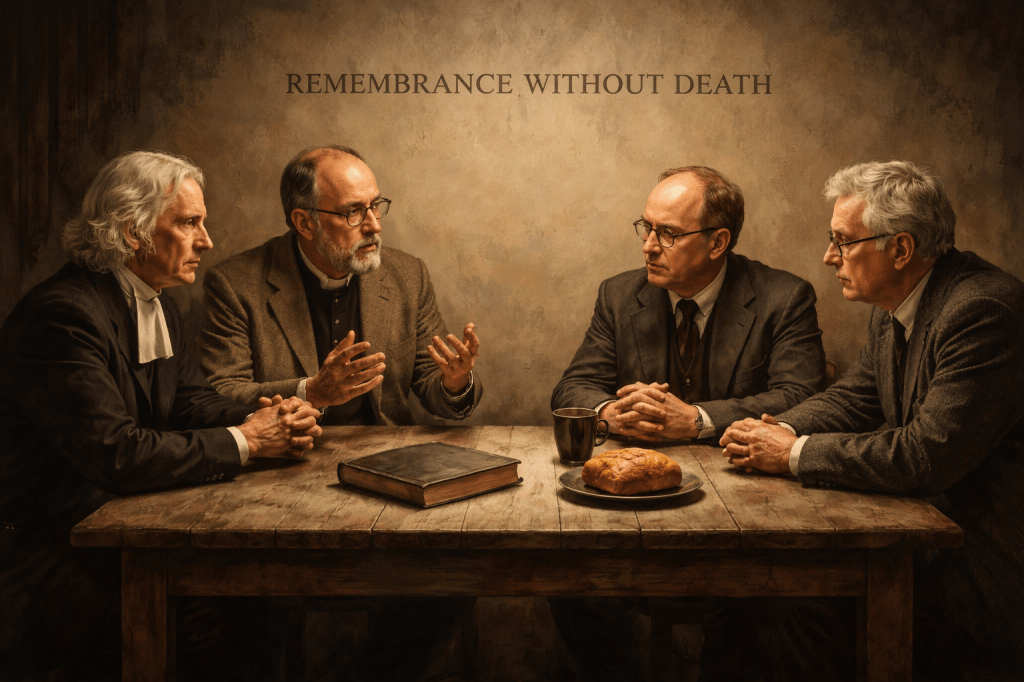
From Revival to Resurrection: Why Christianity (and We) Must Die — Daily!
And trust that whatever rises / will not be called Christianity / but will, unmistakably, be life.
-
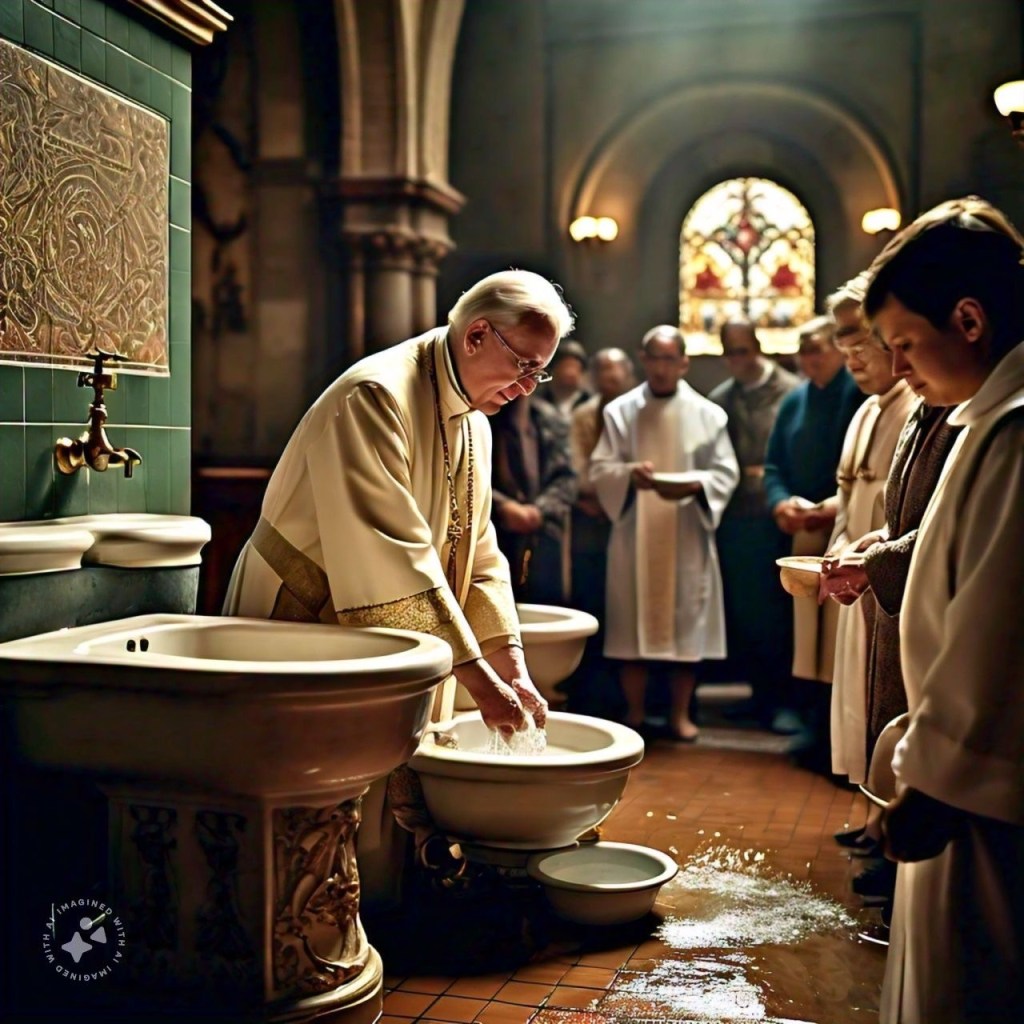
Anthem: Follow The Way Of Christ (Becoming “Foot-Washers”)
To be a “Christian” / Has become a crutch / Though I still love / That old word so much
-

From Christendom to Christ: Religion vs Relationship
Yes He is Wise. / Yes He is Lord. / Yes He is God. / But Christ is so much more…
-
Limerick: Deperishable (God WAS Dead)
As I came down the mountain Man said: Do you not know God is dead?
-
Christianity Beyond, Draft 2
The MINFIG for Christianity Beyond # Expanding Our Beyond Just To Also Include 1 Identity Exclusive Tribes Expansive Unity 2 Maturity Learned Doctrine Lived Gospel 3 Goals Moral Causes Multi-level Transformation 4 Metrics Customer Satisfaction Effective Incarnation 5 Ministry Church Campuses The Marketplace 6 Structures Non-Profits Profitable Businesses 7 Following…
-
Christianity Beyond, Draft 1
Bringing Heaven to Earth. One Cross at a Time. [Update: see my background thinking in Draft 2] Christianity Beyond is a movement of ordinary people who are learning how to make the same kind of extraordinary impact as the Jesus they love. We honor all the ways people have sought…
-
Paleo-Evangelical Christianity
I consider myself a “Paleo-Evangelical” Christian. Like my counterparts in the first century, I have had transformational encounters with the person of Jesus Christ and am devoted to making him known as the Risen Lord; but am still working through which of my inherited cultural understandings and religious teachings are…
-
Spiritual Christianity Poster: Primitive Faith for a Postmodern World
[Final version of Spiritual Christianity: Theology, Simplified] PassionTalks Poster Session, August 11, 2018 Convergence House of Prayer, Fremont, California https://docs.google.com/presentation/d/1r85tCpqvFYNHYQAsp-F7XTtH1C-Yhzpj1NfBTrXRHOI/edit?usp=sharing PT18-SpiritualChristianity-d
-
Lesson 2/6: Growing Up (Anjali’s Catechism)
Discipleship: Make Us Like Jesus As we mentioned last time, the whole point of being a Christian is to become like Jesus: knowing God and loving others the way He did. In fact, the very word “Christian” means “little Christ.” We are supposed to be pictures of Jesus Christ, the way…
-
Lesson 1/6: You and God (Anjali’s Catechism)
The Gospel: God Loves Us Like Jesus You are an amazing person. You have a lot in common with other people, but there is nobody quite like you. You have a body. Head, fingers, toes, belly button. You have a soul. You think. You feel. You want. You have a spirit.…
-
Thanks: Spiritual Maturity in One Syllable (Childlike Theology)
Part 6 of 6 in the series Childlike Theology: Thanks: Spiritual Maturity Wise Risk: Faith He’s Worth It: Worship Open to God: Holiness Make Us Like Jesus: Discipleship God Loves Us Like Jesus: The Gospel
-
Make Us Like Jesus: Discipleship in Five Syllables
A proposed process for fully fleshing-out the Six Syllable Gospel: as part of an accidental series on Childlike Theology: Join together to ask God to make us like Jesus. Interpret everything that happens as God answering that prayer. There is no step 3.
-
Rohan’s Baptismal Creed
Dear God, I confess that you love me better than I can ever love myself. Please forgive me for putting myself first instead of loving you with all my heart, soul, mind and strength, and my neighbor as myself. I am sorry for not listening to and obeying you, and…
-
Becoming a Whole Christian
I want to be a Whole Christian. I want to love the Lord my God with all my heart, all my soul, all my mind, and all my strength, and be part of a worshipping community with others who do. I want to love my brothers and sisters the way…
-
“Who is God and What Does He Want?” Preschool Theology, Book I
My goal for this summer is to turn my 36-week Bible study “Growing Church Leaders” into a three-volume series of picture books for my preschoolers. Here’s my first cut at text for the first one, “Think Biblically”, written one tweet at a time:
-
Good News for Modern Nerds
The Nerd Bible (pdf) started with my sermon notes from 1985 at Park Street Church in Boston, where I was an MIT sophomore…
-
State Estimation and The Meaning of Life
My friend Leland Brown recently found an amazing mathematical theory book called Optimal State Estimation: Kalman, H_infinity, and Nonlinear Approaches, by Dan Simon. In addition to being a great resource for a math problem Leland is working on, Appendix C turns out to have some fascinating meditations on the Christian…
-
The Purpose of Comprehensive Theological Education
As I’ve been meditating on the idea of “Comprehensive Theology“, I’ve begun to realize that it’s main difference from systematic theology isn’t merely (or even primarily) the content. Rather, it is whole pedagogy associated with traditional theological instruction I am reacting against. I might characterize (caricature?) the traditional model as:…
 Radically Happy